
Senate again extends implementation of 2024 Appropriation till December
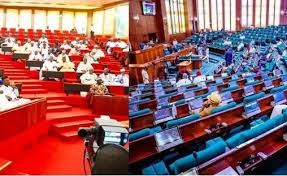
Nigerian Senate approved a second extension of the capital component of the 2024 Appropriation Act in a tense plenary session on Tuesday, shifting its implementation deadline from June 30 to December 31, 2025.
The move granted accelerated passage means Nigeria now operates two federal budgets simultaneously, as the 2025 budget is also in force.
The bill, titled “A Bill for an Act to Amend the 2024 Appropriation Act to further extend the Capital Components of the Act from 30th June 2025 to 31st December 2025” (SB. 854), was presented in the name of the Chairman of the Senate Committee on Appropriations, Senator Solomon Olamilekan Adeola (APC, Ogun West).
It passed through first, second, and third readings in a single session under a suspended rule procedure.
While no senator opposed the bill in principle, debate on the floor laid bare deepening legislative disillusionment over chronic delays, financial mismanagement, and an implementation gridlock that many lawmakers warned could threaten the credibility of both the executive and the National Assembly.
Leading the presentation, Senator Adeola cited the need to allow sufficient time for procurement processes, disbursements, and actual project execution. He acknowledged it was the second time the capital implementation was being extended but emphasized that only the capital component was affected.
However, as senators weighed in, a pattern of frustration and institutional distrust emerged.
Senator Yahaya Abdullahi (Kebbi North), a former Senate Leader, accused the Ministry of Finance and the Office of the Accountant-General of bottlenecking payments and stalling project execution even for contractors who had completed work.
Abdullahi warned that continued mismanagement not only risks government credibility but also raises doubts over the federal government’s ability to fulfill its budgetary promises.
“I have been here since the third session of my presence in this National Assembly. We never had this, it has happened like this and the credibility of this government is getting down,” he said.
He called for immediate executive-legislative engagement with President Bola Tinubu to resolve what he described as a national crisis of financial coordination.
Senator Abdul Ningi (PDP, Bauchi Central) supported the extension but warned of selective project financing by the executive and questioned whether revenue shortfalls were truly the issue, stating that many constituency projects were completed six months ago but remain unpaid.
Ningi called for a formal investigation by the Appropriations Committee to explain continued implementation failures.
His concerns were echoed by Senate Minority Leader Abba Moro (PDP, Benue South), who said the National Assembly risked becoming “an embarrassment to itself” if it continued to rubber-stamp budget extensions without accountability. He noted that contractors have lost trust in the government’s willingness to pay, even as another budget cycle looms.
Senator Seriake Dickson (PDP, Bayelsa West) lamented that despite 100% disbursement of recurrent expenditures, capital projects which directly affect citizens remain largely disenfranchised.
He accused the Executive of being preoccupied with Politics at the expense of the Peoples welfare;
Senate Chief Whip Mohammed Tahir Monguno (APC, Borno North) supported the extension but called for a review of the Finance Ministry’s “bottom-to-top” disbursement policy. He argued that it had introduced bureaucratic bottlenecks and red tape that stall effective budget execution.
Deputy Senate President Barau Jibrin, who presided over the plenary, acknowledged the widespread discontent. He confirmed that the Committees on Finance and Appropriations had engaged the Finance Minister and other stakeholders but hinted that the matter may now warrant direct engagement with President Tinubu.
“If the budget is not extended, projects will be abandoned,” Jibrin said. “But we’re nearing the point where we may have to escalate this to the President himself.”
With the extension, Nigeria now faces the complexity of executing two separate national budgets in parallel, a fiscal irregularity that analysts warn could disrupt planning, obscure financial accountability, and overstretch implementation capacity within MDAs.
This is the second extension of the 2024 capital budget. In December 2024, President Tinubu wrote to the National Assembly requesting a six-month extension from 31 December 2024 to 30 June 2025 to complete ongoing projects. The Senate granted that extension.
Now, with many capital projects still unimplemented and contractors unpaid, lawmakers find themselves in a governance dilemma: extend and risk budgetary overlap or refuse and risk mass project abandonment.
In the end, political pragmatism prevailed over procedural purism.
The Senate passed the bill unanimously by voice vote after clause-by-clause consideration.


Leave a reply


The Editorial is a Platform for factual and precise news updates. Available to the readers 24/7 globally