
Disquiet over moves to create new emirates, chiefdoms in Bauchi
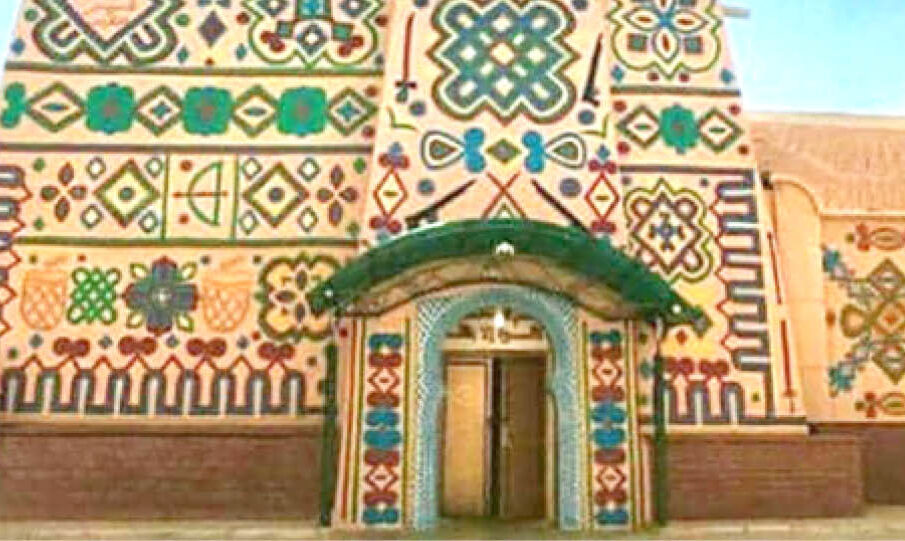
Bauchi Emir’s Palace
The Bauchi State Government’s recent move to create additional emirates, chiefdoms, and districts has sparked a wave of concerns among residents, with religious and community-based organisations expressing divergent views on the matter.
On Friday, Governor Bala Mohammed inaugurated a 40-member committee tasked with working on the creation of the new administrative units. The move comes barely a month after the government called for public memoranda on the subject.
Daily Trust gathered that the committee is chaired by Alhaji Hamza Koshe Akuyam from Misau LGA, with Alhaji Ahmed Ali Ranga, Permanent Secretary, Political, in the Office of the SSG, serving as secretary. The co-secretaries include Alhaji Shehu Yahaya Jalam (Permanent Secretary, Special Services), Alhaji Auwal Shehu Jalo (Permanent Secretary, Local Government Service Commission), and Alhaji Mohammed Ali Manti (Director, Chieftaincy Affairs, Ministry for Local Government and Chieftaincy Affairs).
Speaking at the inauguration, Governor Mohammed said the decision stemmed from campaign promises and growing demands from various communities.
He said, “The government found it expedient and timely to revisit the issue. This initiative seeks to address long-standing demands underpinned by historical legitimacy, social equity, and grassroots consensus.
“Our intention is not just to fulfill political promises but also to deepen local governance, enhance cultural identity, and strengthen traditional institutions as promoters of peace, unity, and development. Historically, traditional institutions in Bauchi State have served as pillars of communal cohesion and agents of progress.
“Expanding these institutions through new administrative units will consolidate peace-building efforts, foster inclusivity, and empower communities to participate meaningfully in governance. The rationale includes promoting peace and stability, mobilising for community development, preserving identities, and preventing communal clashes rooted in unresolved grievances.
“It also supports self-determination, ensures socio-political balance, and offers proactive conflict-prevention mechanisms to address the scars of past clashes and manage our diversity through justice and inclusion.”
He charged the committee to ensure equity and fairness in its recommendations while considering financial sustainability and socio-political inclusiveness.
Currently, Bauchi State has six emirates — Bauchi, Ningi, Misau, Katagum, Jama’are and Dass. Findings by Daily Trust indicate that Governor Mohammed may be planning to create four additional emirates, bringing the total to ten.
Multiple anonymous sources revealed that the Bauchi Emirate may be split into three, with Duguri and Ganjuwa/Toro emerging as new emirates. Dambam and Itas Gadau/Zaki emirates may be carved out of the present Misau and Katagum emirates, respectively. Alongside the four proposed first-class emirates, 20 additional second-class emirates, chiefdoms, and districts may also be created.
Sources suggested the main target of the move is the creation of a Duguri Emirate in the governor’s hometown, possibly to be headed by his family. His elder brother, Alhaji Adamu Mohammed Duguri, currently serves as the district head of Duguri in Alkaleri LGA under the Bauchi Emirate. Sources say he may be elevated to a first-class emir once Duguri is upgraded.
In 2023, Governor Mohammed reportedly constructed a new palace in Duguri — nearly identical to that of the Emir of Bauchi — directly behind his residence.
To gain support, the governor is said to have sponsored the emirs of Misau, Jama’are, Katagum, Dass, and Ningi on this year’s Hajj, excluding Bauchi Emir, Dr. Rilwanu Sulaiman Adamu, who was unwell. Reports indicate he met with the emirs in Saudi Arabia to deliberate extensively on the matter, leading to the committee’s inauguration.
The Bauchi State Muslim Parliament (Majlis Shura) opposed the move, warning of its potential negative consequences.
In a statement signed by its Chairman, Sheikh Yusuf Abdullahi Jahun, the group said: “This exercise may prove futile. Future administrations may reverse it, continuing a cycle of re-creations and dissolutions that waste time and resources and serve narrow political interests.”
The group cited the protracted conflict over the creation of the Sayawa Chiefdom, reiterating their longstanding opposition to placing its headquarters in Tafawa Balewa or Bogoro. “We re-echo our firm stance. The Law of 2011 and its 2014 amendment clearly state the designated headquarters. No clearer or more peace-seeking solution exists.”
They added: “While we understand the drive for status upgrades, we urge the government to preserve the legacy and survival spirit of the centuries-old traditional institutions. That is our hope and our prayer.”
Similarly, the Zauren Mutanen Jihar Bauchi, in a letter signed by Secretary Malam Abdullahi Garba Lame, warned against what they called “the fragmentation of Bauchi’s traditional institutions.”
“From other states’ experience, this approach is often politically motivated and counterproductive. Our traditional institutions have stood strong for centuries. Dismantling them could have far-reaching consequences for our identity and political stability ahead of 2027.”
The group criticised what they called increasing political interference in traditional matters, urging thoughtful reform instead of division. “Does this restructuring serve the people or certain vested interests tied to natural resource control?” they asked.
They stressed that any memorandum submitted in favour of the initiative does not reflect broad-based public consent and called for a transparent avenue to assess public sentiment.
It could be recalled that former Governor Isa Yuguda, at the tail end of his administration (2014–2015), increased the number of traditional domains from 39 to 193. His successor, Mohammed Abdullahi Abubakar, dissolved the newly created domains, citing financial unsustainability and alleged political motives.
However, the Abubakar administration later reconsidered its stance amid growing public demands, emphasising that any review would aim to protect the integrity and efficiency of the traditional institution.
Observers believe the current proposal has political implications, particularly in the run-up to the 2027 general elections. According to some pundits, results from the 2023 polls revealed challenges that could hinder the ruling PDP’s chances in the next cycle — unless vote patterns are recalibrated.
One observer noted, “Bauchi Emirate currently delivers the highest number of votes. Splitting it into Duguri and Ganjuwa/Toro emirates will reduce its political weight. Similarly, creating Dambam and Itas Gadau/Zaki from Misau and Katagum will dilute their influence.”
The Fulani community under the Daddo Pulako umbrella and affiliated associations also rejected the plan, especially the proposal to create Sayawa Chiefdom from Tafawa Balewa LGA, currently under the Bauchi Emirate.
They argued it would be unjust for Hausa and Fulani, who make up over 80 percent of the population, to be placed under a minority-led Sayawa Chiefdom.
Speaking at a press conference, former Bauchi House of Assembly member, Alhaji Muhammad Aminu Tukur, said: “Our allegiance remains with the six historic emirates. Subjecting us to new emirates without our consent undermines our right to free association and could create tension.”
He added: “The current proposal appears driven by ethnic interests rather than administrative necessity. We, the Fulani of Bauchi, reaffirm our commitment to the six emirates of Bauchi, Katagum, Misau, Ningi, Jama’are and Dass.”
Tukur also warned that politicising traditional institutions, as seen in states like Plateau, Kaduna and Taraba, has resulted in societal division and conflict. “Let us not import those mistakes here.”
Instead, he urged the government to prioritise development — citing widespread deficiencies in rural education, healthcare, infrastructure and agriculture.
In response, the governor’s Special Adviser on Media and Publicity, Alhaji Mukhtar Gidado, dismissed the allegations as baseless.
“I am not aware of such claims. Even if they exist, they are unfounded. The governor has set up a committee made up of respected professionals and instructed them to act with fairness and objectivity.”
He added, “The committee comprises high-calibre individuals from various backgrounds who are more than capable of handling the assignment. If anyone has concerns, they should direct them to the committee.”
Gidado noted that Governor Mohammed had cited Gombe and Nasarawa States as examples where the creation of new emirates had brought development. “If communities want new emirates, they should submit their requests. If not, they don’t have to. What’s clear is that this move is intended for the good of Bauchi State.”



Leave a reply


The Editorial is a Platform for factual and precise news updates. Available to the readers 24/7 globally