
Bago, unseal Badeggi FM now! {PUNCH Editorial}
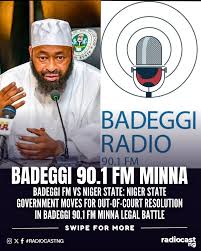
GOVERNOR Mohammed Bago’s shutdown of Badeggi 90.1 FM in Minna is an autocratic overreach and a grave assault on press freedom. No democratic government that respects the Nigerian Constitution should padlock a newsroom simply because it dislikes its editorial stance.
Yet that is exactly what happened when Niger State officials sealed the station on Bago’s orders on July 31. The governor cited allegations of “public incitement” and “security concerns”, claiming the station promoted violence.
He ordered the profiling of the station’s owner and withdrew its licence. But Bago’s actions are ultra vires. Only the Federal Government, through the Nigerian Broadcasting Commission, has the authority to issue or revoke broadcast licences. The governor cannot rescind what he never granted.
Section 39 of the 1999 Constitution guarantees freedom of expression and the press. The NBC has established procedures for investigating breaches and sanctioning offenders. A governor has no legal authority to summarily shut down a broadcaster. When the executive acts as accuser, judge, and enforcer, due process dies, and with it, public trust.
As expected, the backlash was swift. Amnesty International called the move an “abuse of power”. The Nigerian Guild of Editors, Nigerian Union of Journalists, and Nigerian Bar Association have also condemned the closure, insisting that grievances against the media must be addressed through lawful regulators and courts, not through bulldozers and police lockdowns.
Civil society organisations and media lawyers point out that if content truly crossed a legal line, the remedy is transparent adjudication, not collective punishment of staff and audiences.
Defenders of the Niger State Government argue that security exigencies justify exceptional measures. This claim, however, does not hold up to the slightest scrutiny.
First, no evidence has been publicly presented to demonstrate that Badeggi FM posed a threat to public safety.
Second, even in emergencies, constitutional rights do not vanish; they are balanced through law, not by unchecked fiat.
Third, silencing a community radio station in a state grappling with banditry and rural violence is strategically myopic.
Local stations are force multipliers for peacebuilding: they dispel rumours, amplify early-warning alerts, and provide authorities with platforms to inform, reassure, and mobilise citizens.
Shutting them down only drives anxious populations into the arms of misinformation merchants.
There is also a broader danger. Each extra-legal closure sets a precedent that other governors can cite to silence critical voices.
Today, it is Badeggi FM; tomorrow, it could be any newsroom questioning security spending, palliative distribution, land grabs, or procurement. Nigerians know this playbook well: when power is allergic to scrutiny, it resorts to chains.
A government confident in its legitimacy answers speech with speech and facts with better facts—not by locking studio doors.
If officials believe Badeggi FM erred, let the NBC investigate openly; let the station be heard; let any sanctions be proportionate and appealable. Anything less is executive impunity.
Moreover, the Federal Government and the NBC cannot stand by while sub-national actors vandalise the regulatory order. The commission should urgently clarify that only it can sanction broadcasters and should mediate a lawful, time-bound path to the station’s reopening.
Parliament must also exercise oversight: summon the parties, scrutinise the facts, and warn against a creeping culture of censorship by convenience.
To the courts: the rule of law exists precisely to restrain moments like this. Any media house facing extra-legal closure should seek immediate judicial relief. Judges must act with the urgency these cases demand.
A free press is not a privilege of lobbyists; it is a public utility. Shutting it down silences communities.
The Niger State Government must reverse course. It should unseal Badeggi FM and pursue any substantive complaints through proper channels.
It should use the airwaves, not arbitrary force, to win hearts, correct errors, and build the social consensus every state needs to confront insecurity. The governor cannot strengthen security by strangling scrutiny; he is only deepening fear, fuelling rumours, and forfeiting legitimacy.




Leave a reply


The Editorial is a Platform for factual and precise news updates. Available to the readers 24/7 globally