
African literature emerges from African soil, but its resonance is global
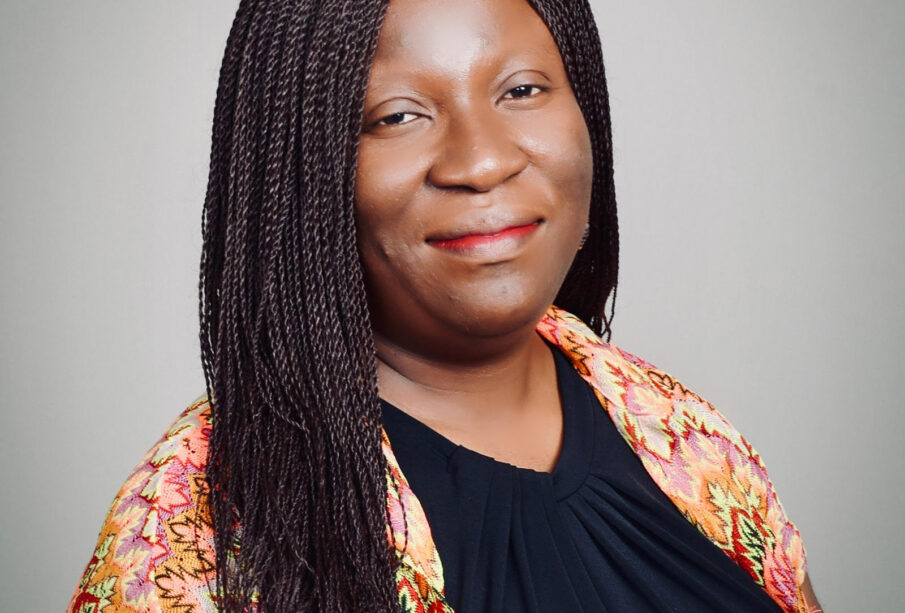
Dr. Elizabeth Olaoye is a Nigerian lecturer of English Language at the Texas A&M University, San Antonio USA. She speaks on contemporary literary issues, and the need for a review of curriculum in African education among other related issues.
What is your evaluation of the state of formal education in Nigeria?
The Nigerian formal education landscape has undergone noticeable evolution since my own student days, most visibly in the proliferation of private universities.
Before relocating to the United States in 2018, I had the opportunity to teach at two such institutions, and while they have made commendable efforts to improve facilities and infrastructure, the academic ethos remains tethered, in many disciplines, to inherited colonial pedagogies.
Speaking from my own field, English language education still privileges outdated curricular models that often fail to cultivate students’ authentic voices and cultural identities. An excessive emphasis on phonology and phonetics—valuable though they may be—can, in our context, marginalize the communicative and creative capacities that should be at the heart of language learning. The lingering colonial imprint, particularly in public institutions, continues to shape knowledge production in ways that are not always congruent with contemporary Nigerian realities.
Based on your views on formal education, what should be the defining structure of curriculum across all levels of education to promote result-oriented education?
From my observation, I am persuaded that a truly transformative curriculum must be tailored not merely to what is globally sanctioned, but to the immediate needs, aspirations, and historical particularities of the society it serves. A curriculum divorced from its social and cultural soil risks producing alienated graduates—learners who are well-trained but ill-suited for the peculiar challenges of their communities. Should we not, then, ask: What is the purpose of education if not to enable a people to stand upright in the world? It is perplexing, for instance, that engineering programs rarely seek to address the infrastructural crises endemic to developing nations. Our language instruction too often neglects the vitality of indigenous tongues, while our history curricula sometimes evade uncomfortable truths. Yet, as the Nigerian proverb reminds us, “The man who cannot tell where the rain began to beat him cannot say where he dried his body.”
Therefore, we must embrace our identity in its fullness—where we have come from, where we stand, and where we are headed. Only then can we fashion a curriculum that not only educates but also liberates. Furthermore, technical and vocational education must cease to be trivialized; for in the long labor of nation-building, “Ìrùgbìn tí yóò dàgbà dára ni ìgbà tí a bá gbìn ni yóò ṣe àfihàn rẹ̀”—the seed destined for greatness shows its promise at planting.
There has been ongoing conversation about the dearth of reading culture in Nigeria. Is it a peculiar problem or a global problem?
The decline in sustained reading engagement is not unique to Nigeria; it is a global challenge intensified by the ubiquity of smartphones, tablets, and rapid-fire digital content. That said, for students in disciplines such as English and History, extensive reading remains indispensable. Skilled educators—whether in Nigeria, the United States, or elsewhere—must continually innovate to rekindle interest in deep reading. Yet, as the African proverb reminds us, one can lead a horse to water but cannot compel it to drink. Crucially, reading culture begins in the home, not the classroom. For first-generation students—many of whom in Nigeria come from homes where neither parent has received formal education—additional institutional support is critical. Early identification of such students, coupled with targeted interventions, can help bridge socio-educational divides. This calls for a more proactive role for school counsellors, who must be trained to employ data-driven approaches in fostering equitable literacy development.
There have been arguments that digital books have an edge over hard copies in encouraging book reading. What are the far-reaching impacts of digitalization in education?
If you ask me, I will tell you that books are books—whether bound in paper or illuminated on a screen. As one educated in Nigeria in the 1980s and 1990s, there is something ineffable about the tactile presence of a physical book. I grew up in a home where bookshelves overflowed with encyclopedias, cookbooks, novels, and biographies. That encounter made me who I am today.
When I recently received a hard copy of an anthology of essays in which my own work was featured, I was overwhelmed by a joy that no digital file could replicate. And yet, I also maintain a Kindle library, where I access new novels by contemporary writers. Digital books confer immediacy and reach, but in contexts like Nigeria, where electricity is unreliable and devices remain expensive for some people, dependence on digital formats alone would be limiting.
We must therefore adopt a pragmatic posture: assessing the needs of our learners and designing modes of transmission that balance accessibility with sustainability. Knowledge is not a monolith; it must be clothed in garments appropriate to the climate of its people.
What is the current position of African literature in the global context?
African literature is a vast and polyphonic tradition, encompassing voices from the North, South, East, and West of the continent. To attempt to speak for it monolithically would be to risk erasure. Yet, it is evident that despite being locally emplaced, many African writers participate in what Achille Mbembe calls a “planetary turn” in global thinking. Their work emerges from African soil, but its resonance is planetary.
It is noteworthy, however, that several leading voices of contemporary African literature—such as Abubakar Adam Ibrahim, Chimamanda Ngozi Adichie, Nnedi Okorafor, Noo Saro-Wiwa, and Wole Talabi—are diasporic, traversing the globe while retaining deep connections to their homelands. Their global visibility has been underscored by significant accolades:
- Chimamanda Ngozi Adichie: Orange Prize for Fiction, National Book Critics Circle Award, PEN Pinter Prize.
- Nnedi Okorafor: Hugo Award, Nebula Award, World Fantasy Award.
- Wole Talabi: Nominee for the Locus and Hugo Awards, Winner of the Nommo Award for African speculative fiction.
- Donald Ekpeki: Winner of the Otherwise Award, Nommo Award, and British Fantasy Award.
- Abubakar Adam Ibrahim: Winner of the Nigeria Prize for Literature.
What is spectacular about these writers is not merely their acclaim, but their deft ability to weave African cultural elements with global narrative strategies, producing works that are simultaneously rooted and universal. African literature, in conversation with the globe, enriches world letters.
Do you think present-day African writers are given the recognition they deserve based on the quality of their work?
But first, what do we mean by recognition? Do we speak of international prizes, critical reception, readership, or the ineffable honor of being remembered? Writing is both craft and calling, and a writer deserves recognition for both. Critics such as Ainehi Edoro of Brittle Paper have cautioned against valuing African literature primarily for sociological insights, rather than its literary craft. Her point is salient: art must be assessed on its aesthetic merits. Yet, content and craft are not entirely separable.
The evidence suggests that African writers are indeed gaining recognition, if not always uniformly. Nnedi Okorafor has not only won numerous awards but has coined conceptual frameworks such as Africanfuturism and Africajujuism, both of which are now critical categories in global literary discourse. Still, recognition is not solely measured in awards. Some writers—like A. Igoni Barrett with Blackass or Biyi Bandele with The Man Who Came in from the Back of Beyond—win immortality in the hearts of readers.
Favourite African writers, past and present, and why your choices?
From the past, I admire Mariama Bâ for her piercing feminist critique, Chinua Achebe for his foundational reclamation of African dignity, Peter Abrahams and Alex La Guma for their courageous political witness, and Buchi Emecheta for her profound explorations of gender and resilience.
Among contemporary voices, I delight in the writings of Biyi Bandele Thomas for his wit, Abubakar Adam Ibrahim for his textured realism, Chimamanda Ngozi Adichie for her cosmopolitan eloquence, Nnedi Okorafor for her audacious imagination, and A. Igoni Barrett for his satirical genius. What unites these authors for me is their capacity to narrate in accessible yet profound ways— textured, and deeply humane. These writers, in their various registers, are the elders of our time, giving voice to the unspeakable and shaping the future of African letters.
As a teacher of the English language, do you subscribe to calls for a local lingua franca for Nigeria, given its diverse linguistic composition?
Nigeria’s complex colonial legacy and rich ethnolinguistic diversity make the question of a national lingua franca both intriguing and fraught. My own experience underscores this: upon meeting a newly hired Nigerian colleague in my U.S. department, we found ourselves relying exclusively on English, as we shared no indigenous language. In such a context, replacing English with a single local lingua franca would be a profoundly complicated undertaking.
Rather than displacing English, we should recognize and legitimize the dynamic, localized variety of English that has organically evolved within Nigeria. Nigerian English, with its distinctive lexical items—many now formally acknowledged in the Oxford English Dictionary, such as 419, Agbero, and Japa—reflects the lived realities of its speakers. When recently perusing English questions administered by the Joint Admission and Matriculation Board, none of these words are woven into recent tests. Instead of penalizing students for code-mixing or the creative infusion of indigenous terms into English, educators should value intelligibility and communicative efficacy over prescriptive grammatical purity. To ask Nigerians to suspend their linguistic identities in academic or professional contexts is, in essence, to request a temporary cultural dislocation.
International Literacy Day is just a few weeks away. How much impact would you say literacy has on development globally?
Literacy remains one of the most decisive catalysts for human and societal development. It is not merely the ability to decode symbols on a page; it is the gateway to critical thinking, civic participation, and economic empowerment. The first set of books I read, for instance, were instrumental in shaping my picture of the world. Books like Akin Goes to School, The Sugar Girl and The Nation Wide English textbook, did not just introduce me to reading, but also emphasized virtues treasured in our society. Across the globe, nations with high literacy rates consistently demonstrate greater innovation capacity, more robust democratic institutions, and stronger economic resilience. Literacy enables individuals to navigate complex information environments, from health advisories to financial systems, and empowers communities to advocate for their rights. Even our African nationalist struggles, literacy was a catalyst to success. Those visionaries like Nnadi Azikwe, Obafemi Awolowo, Bode Thomas and a host of others all rose on the foundation of literacy. Moreso, in our increasingly interconnected world, literacy is not optional; it is foundational to both personal agency and collective progress.
Looking at your profile, you are obviously an authority on literature. Why is literature as a subject of study still relevant across the globe?
From the classical period to the present, many sceptics have doubted the relevance of literature. Despite its many critics, including the classical philosopher Plato, literature endures as a vital field of study because it interrogates the human condition in ways that data (in the social sciences) alone cannot capture. Across cultures and historical periods, literature preserves collective memory, transmits values, and fosters empathy by inviting readers into perspectives other than their own. For instance, although we don’t study African literature solely for ethnographic reasons, Achebe’s narrative set in precolonial Africa- Things Fall Apart and Arrow of God, remain valuable texts for decoding how the Igbos lived before the advent of colonialism. Alongside other authors like Wole Soyinka and Buchi Emecheta, Achebe’s other narratives reveal the complexity of the colonial encounter and the dilemma of the military era in Nigeria. In a world often polarized by ideology, literature offers a space where complexity is embraced rather than reduced, and where the ambiguity of lived experience can be contemplated without the demand for immediate resolution.
What is your favourite literary style?
Though I admire the inventive architectures of fantasy and speculative fiction, I am most drawn to the deceptive simplicity of realistic prose. A narrative that renders ordinary lives with extraordinary depth always compels me more than labyrinthine plots. For me, clarity with profound undertones is preferable to opacity masquerading as complexity.


Leave a reply


The Editorial is a Platform for factual and precise news updates. Available to the readers 24/7 globally