
FG leverages technology to fortify borders against criminals
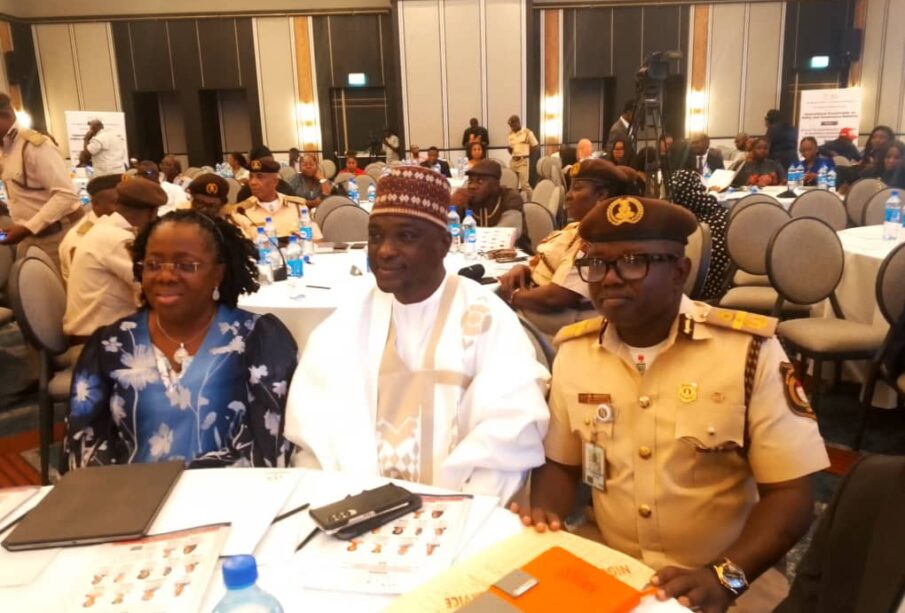
The Federal Government has announced that ongoing reforms across Nigeria’s airports and land borders are set to significantly restrict the entry of suspected criminals and individuals on national wanted lists.
The Permanent Secretary of the Ministry of Interior, Dr Magdalene Ajani, disclosed this during an international roundtable on policy and governance reforms in Nigeria’s immigration and border management sector, recently in Ikeja, Lagos.
Ajani emphasised that the sheer scale of Nigeria’s frontiers necessitates a shift from traditional manual surveillance to a technology-driven approach.
Ajani said, “In securing a land border of over 4,000 km and a water border of over 800 km, you know that much more is required beyond men and women and the conventional methods we used before these reforms, where people were stationed at various locations.
“You can imagine the number of personnel and equipment needed to secure a land space of 4,000 km in such difficult terrain. Technology is here, and as a nation, we are saying we can embrace it to make our border management and security more effective.
“With technology, we can strengthen our border management and security beyond what it currently is.”
The Permanent Secretary further explained that the first phase of the technological deployment has already covered approximately 1,000 kilometres of the nation’s borders, with approval already granted by the government to commence the second phase.
She noted that the systems are essential for tracking arrivals and ensuring that “those of the wanted list can’t come into the country,” as authorities will now have comprehensive details on those attempting to cross the 4,000 km border expanse.
Corroborating the stance, the Comptroller General of the Nigeria Immigration Service (NIS), Kemi Nandap, stated that the reforms are designed to balance rigid security with the facilitation of economic growth.
Represented by the Assistant Comptroller General (Zone A), Mohammed Adamu, the CG stressed that “a safe border is a safe nation, and a smart border is a prosperous nation.”
“Nigeria’s borders must serve as defence against transnational crimes such as trafficking, smuggling of migrants and also as a gateway for legitimate trade, investments and tourism,” he added.
Supporting the reform initiatives, the President of the Nigerian American Chamber of Commerce (NACC), Alhaji Sheriff Balogun, observed that recent improvements in passport issuance and processing have already brought essential services closer to Nigerians globally.
Balogun said, “As a chamber of commerce, we listen to the concerns of our members, and some of the issues that come up involve the ease of entry and movement across borders, obtaining expatriate quotas, securing permits, and related matters.
“The agencies responsible for this include the immigration services and, of course, the ministry. That is why we brought in both the implementers and the policymakers, so we could have a heart-to-heart conversation around these issues and explore how they can be streamlined and put in a better position.”
He noted the positive impact on the economic landscape, saying, “They have done very well, I must say. Once all of this is in place, you will definitely see more investment coming in, because people will recognise that there is ease of doing business in the country, and they will be willing to come.”
The event with the theme, ‘Deconstructing the Immigration and Border Management Governance and Policy Reforms in Nigeria,’ also featured the NACC presenting excellence awards to three distinguished individuals for their contributions to public sector reform.
They are the Permanent Secretary, Ministry of interior Dr Magdalene Ajani, the CG Nigeria Immigration service, Kemi Nanna Nandap, and Mrs Bolanle Austen-Peters.



Leave a reply


The Editorial is a Platform for factual and precise news updates. Available to the readers 24/7 globally