
Fuel price may rise as Middle East tensions escalate
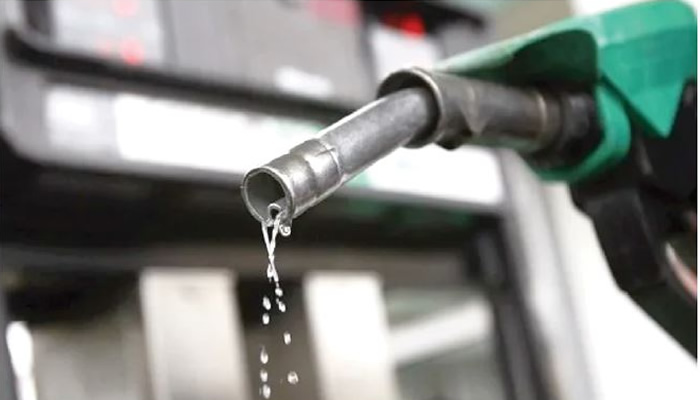
Petrol pump
Rising tensions in the Middle East, triggered by ongoing US and Israeli attacks on Iran, may push fuel prices higher in Nigeria, as crude oil prices reached $72.87 per barrel on Sunday.
The escalation followed a military operation in which Iran’s Supreme Leader, Ayatollah Ali Khamenei, his daughter, grandchild, daughter-in-law, and son-in-law were killed.
The United States and Israel launched a massive, coordinated strike across Iran, including in the capital, Tehran, marking a major intensification of the regional conflict.
The developments carry significant implications for Nigeria, where crude oil accounts for more than 85 percent of export earnings and nearly half of government revenue.
Experts have urged proactive measures to mitigate potential economic impacts. While the surge in crude prices could boost federal government revenue—provided production is optimised—it also carries the risk of increased pump prices for petrol (PMS) in local markets.
As oil prices continue to climb, analysts warn that inflationary pressures may follow, potentially raising the cost of living and affecting households across the country.
Oil and gas expert, Ayodele Oni, in his analysis of the situation, said, “Oil prices are likely to go up a bit. Not as much because of the already existing sanctions.
“It is an opportunity for the government to earn more forex, but prices at the pump, too, may increase because higher crude prices would generally mean higher prices at the filling station, too.
Speaking on Sunday, energy expert Kelvin Emmanuel said crude oil prices will go up, and the implication for Nigeria is that the revenue accretion for the government is going to increase because the government benchmark for crude oil prices is around $64.85 per barrel for the 2026 Appropriation Act.
“But on the other hand, if crude oil prices go up, the price of petroleum products will go up because we’re now in the post-subsidy era and any increase in the price of crude oil means that the refinery, for example, Dangote Refinery, is going to have to revise its price based on its cracking margins on the realities we have on ground today,” Emmanuel, who is Co-Founder and CEO of Dairy Hills, added.
Dr Muda Yusuf, the Chief Executive Officer of Centre for the Promotion of Private Enterprise (CPPE), also explained that geopolitical tensions in the Middle East historically trigger sharp increases in crude oil prices due to fears of supply disruptions.
He said the effects of the conflict will be both positive and adverse, based on the duration of the conflict and the quality of domestic policy responses.
According to him, the immediate benefits of the conflict for Nigeria include higher crude export receipts, improved foreign exchange inflows, strengthening of external reserves and increased FAAC allocations to all tiers of government.
He, however, said revenue gains are critically dependent on production levels.
Nigeria’s current crude output has fluctuated around 1.4–1.6 million barrels per day, below installed capacity and vulnerable to oil theft, pipeline vandalism, and underinvestment in upstream infrastructure, he said.
He added, “Without a sustained improvement in production efficiency and security, Nigeria may not fully optimise any price windfall.
“There is also a medium-term risk. If the conflict escalates and dampens global growth, oil demand could weaken, leading to price corrections. The fiscal upside is therefore inherently fragile.”
He also said higher oil prices typically strengthen Nigeria’s current account balance and improve foreign exchange liquidity, adding that this could reduce short-term pressure on the naira and reinforce investor confidence.
He said higher prices will boost gross external reserves, enhance foreign exchange market liquidity and reduce speculative pressure on the currency.
He also said the development will lead to rising pump prices, increased transportation/logistics costs, higher food distribution expenses and escalating manufacturing and logistics costs.
He added: “Energy costs have a strong multiplier effect in Nigeria’s inflation dynamics. Transportation and food prices account for a significant share of consumer expenditure. With purchasing power already fragile, sustained increases in fuel prices could intensify cost-of-living pressures and deepen poverty levels.
“Thus, while government revenues may rise, household welfare could deteriorate—creating a divergence between fiscal gains and social outcomes.”
ad
He said the Nigerian capital market is likely to experience differentiated sectoral impacts.
He explained that oil and gas equities may benefit from improved earnings expectations and stronger investor interest in energy-linked assets.
He also said manufacturing, aviation, logistics, and consumer goods companies may face margin compression due to higher energy and input costs.
Foreign portfolio flows could weaken if global financial tightening intensifies, he said, adding that short-term volatility in equity and fixed-income markets is therefore expected to increase.
Speaking with Daily Trust, a renowned professor of petroleum economics, Prof. Wumi Iledare, advised that Nigeria must resist the temptation to interpret the US–Iran strike as the beginning of another historic oil shock.
He said, “In the past, prices reacted sharply because supply options were limited and market information was slower. Today, markets operate on rational expectations. Traders and investors assess real-time data — spare capacity, alternative supply sources, demand conditions, and the probability of sustained disruption.
“Unless there is a prolonged and material loss of physical supply, any price spike is unlikely to be permanent. OPEC does not set oil prices. Prices are determined in global markets. Geopolitical tensions may introduce a temporary premium, but that premium fades when fundamentals remain stable.”
He added that for Nigeria, this is where caution is essential, and if crude prices move toward $80 per barrel, it should not be treated as a new normal.
On his part, Prof. Dayo Ayoade, energy law expert at the University of Lagos, said prices might not go too crazy as countries have their own stockpiles of crude oil.
He said, “I don’t anticipate at this time that prices will rise up to maybe $100, which would be very astonishing. Well, if it climbs to $80, all well and good, I suppose. More money comes into the coffers of the Nigerian government, and with Executive Order 9 also in play, a lot of revenue will pour in.
“At the same time, we must understand that the Nigerian government is still borrowing money for recurrent expenditure to repay loans. So, it’s not all Uhuru. Money will come in, but at the same time, we also have barrels of oil that have been pledged for loans.”
Ademola Henry Adigun, Chief Executive Officer of AHA Consultancies, told Daily Trust that the escalating conflict is likely to cause further disruption in the global oil market and deepen instability in the Middle East.
He said, “Oil prices will rise, which could increase Nigeria’s revenue earnings. However, it will also trigger higher prices for petroleum products.”
Mohammed Bouigie Attah, a procurement expert, told Daily Trust that global oil markets could become very volatile on account of the conflict.
Nigeria, he hinted, will not be spared from the oil volatility, though the country will benefit from the turmoil, particularly if it’s very strategic in its resource management.
To harness the benefits of the conflict, Dr Muda Yusuf stressed the need for Nigeria to intensify anti-theft operations and incentivise upstream investment to maximise output within OPEC limits.
Nigeria, he advised, must channel excess revenues into stabilisation and sovereign savings frameworks.
According to him, the country must deepen domestic refining to reduce vulnerability to imported refined products, enhance transparency and liquidity in the foreign exchange market to mitigate volatility and cushion vulnerable households against energy-driven inflation shocks.
He also advised the federal government to expand non-oil exports, manufacturing, agro-processing, ICT, and services to reduce external vulnerability.
He said, “The Iran–U.S.–Israel conflict represents a classic double-edged shock for Nigeria. Higher oil prices may strengthen fiscal and external balances in the short term. However, inflationary pressures, welfare deterioration, capital flow volatility, and global growth risks pose significant countervailing threats.”




Leave a reply


The Editorial is a Platform for factual and precise news updates. Available to the readers 24/7 globally