
Iran allows passage through Strait of Hormuz after US ceasefire agreement
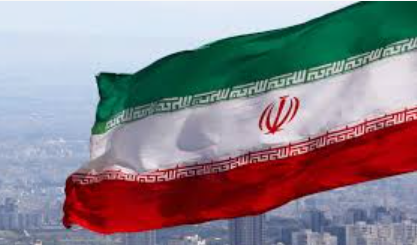
Iran has announced its readiness to scale back military operations in response to a proposed ceasefire, signalling a possible de-escalation in tensions following the United States’ decision to suspend planned attacks for two weeks.
In an official statement issued in Tehran late Tuesday, Iran’s Foreign Minister, Seyed Abbas Araghchi, expressed appreciation to Pakistan’s leadership for mediating efforts aimed at ending hostilities in the region.
He specifically acknowledged the roles of Prime Minister Shehbaz Sharif and Army Chief Asim Munir for what he described as “tireless efforts to end the war.”
“On behalf of the Islamic Republic of Iran, I express gratitude and appreciation for my dear brothers for their tireless efforts to end the war in the region,” Araghchi stated.
Responding to diplomatic overtures and ongoing negotiations, the Iranian government outlined its position, linking any halt in its military actions to a cessation of attacks against its territory.
“If attacks against Iran are halted, our powerful armed forces will cease their defensive operations,” he declared, emphasising that Iran’s posture remains defensive in nature.
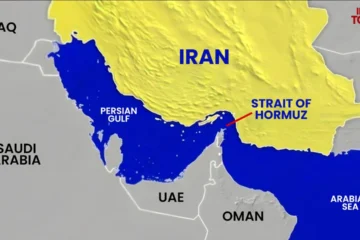
The minister also announced a temporary arrangement regarding one of the world’s most critical oil transit routes, the Strait of Hormuz.
According to him, Tehran would permit controlled maritime access during the negotiation period.
“For a period of two weeks, safe passage through the Strait of Hormuz will be possible via coordination with Iran’s Armed Forces and with due consideration of technical limitations,” he added.
The development comes shortly after U.S. President Donald Trump announced a two-week suspension of planned military strikes against Iran, describing the move as part of a “double-sided ceasefire” aimed at creating space for a comprehensive peace agreement.
Trump said the decision followed discussions with Pakistani leaders and was contingent on Iran reopening the Strait of Hormuz and engaging constructively in negotiations.
He revealed that both sides were working with competing proposals — a 15-point framework from the United States and a 10-point proposal from Iran — which he said had already seen significant areas of agreement.
The U.S.–Iran standoff has long been rooted in disputes over security, regional influence, and nuclear policy, with periodic escalations raising fears of wider conflict in the Middle East. The latest exchange of statements from Washington and Tehran, however, suggests a cautious shift toward diplomacy, with Pakistan emerging as a key intermediary.



Leave a reply


The Editorial is a Platform for factual and precise news updates. Available to the readers 24/7 globally