NASS passes N68.3trn 2026 budget after Tinubu’s upward review request
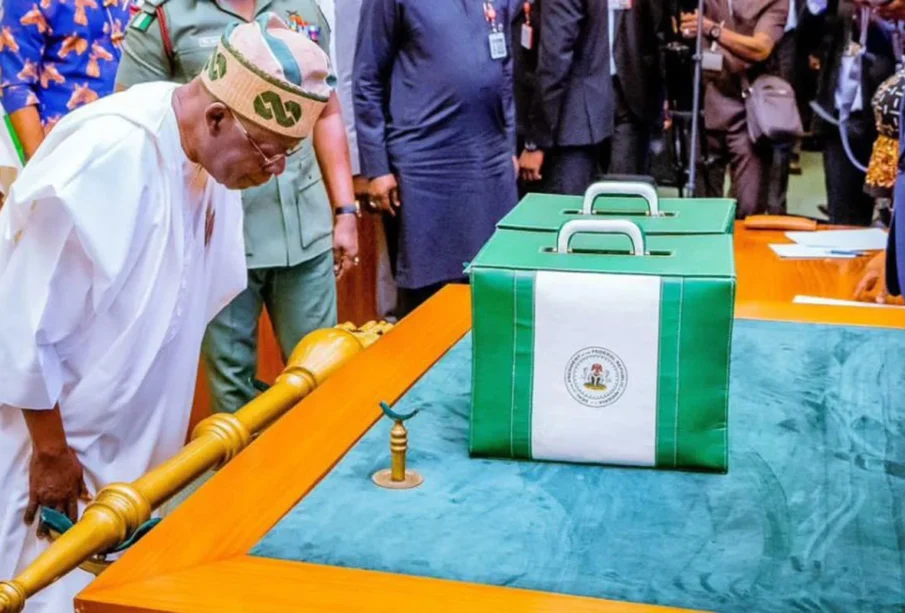
The national assembly has passed N68.3 trillion as the budget for the 2026 fiscal year.
The senate and house of representatives passed the money bill during Tuesday’s plenary.
In December 2025, President Bola Tinubu presented N58.47 trillion as the 2026 appropriation bill to both chambers of the national assembly.
The president subsequently asked the national assembly to increase the budget estimates by N9.81 trillion on Tuesday.
Tinubu said the request was aimed at strengthening fiscal transparency and ensuring effective implementation of priority national programmes.
The president said the proposed adjustments are intended to regularise outstanding legacy capital commitments carried forward from previous appropriation cycles, and ensure that unresolved obligations from earlier budgets do not burden the 2026 fiscal programme.
The president also proposed consolidating outstanding government indebtedness from previous fiscal cycles into the 2026 appropriation framework, noting that the adjustment would allow the government to fund a limited number of strategic additions in sectors such as transport, health, and institutional preparedness.
The president said the request had become necessary because the outstanding obligations are unlikely to be implemented before the expiration of the 2025 capital budget implementation window.
Tinubu said the proposed adjustments also include strategic interventions of national importance, including a federal government equity provision of N478.6 billion under the ministry of finance to support presidential legacy light rail projects in Lagos and Kano, alongside feasibility studies for urban light rail projects in Enugu and Maiduguri.
He said the proposal also includes N8.6 billion for feasibility studies on the Calabar–Maiduguri corridor and the Maiduguri–Sokoto superhighway under the Renewed Hope National Beltway initiative.
Tinubu added that the adjustment is designed to preserve macro-fiscal stability and minimise pressure on the domestic credit market.
Both chambers of the national assembly separately considered and approved the president’s request.
Thereafter, the lawmakers passed the appropriation bill for third reading.
In December, the national assembly passed the 2026-2028 medium-term expenditure framework (MTEF) and the fiscal strategy paper (FSP).
MTEF is a mandatory three-year fiscal planning document that sets budget parameters, including oil prices, production, and exchange rates.
The house of representatives endorsed the federal government’s projected crude oil benchmark prices of $64.85, $64.3, and $65.5 per barrel for 2026, 2027, and 2028, respectively.
However, the senate approved a downward review of the crude oil benchmark price for 2026 to $60 per barrel, from $64.85
The national assembly retained the projected domestic crude oil production of 1.84 million barrels per day (mbpd), 1.88 mbpd, and 1.92 mbpd for 2026, 2027, and 2028, respectively.
The legislature approved a projected exchange rate of N1,512, N1,432.15, and N1,383.18 for the 2026-2028 fiscal year.
Regarding inflation rate projections for 2026, 2027, and 2028, the legislators adopted 16.5 percent, 13 percent, and 9 percent, respectively.
The lawmakers approved GDP growth rate projections of 4.68 percent, 5.96 percent and 7.9 percent for the years 2026, 2027, and 2028, respectively.



Leave a reply


The Editorial is a Platform for factual and precise news updates. Available to the readers 24/7 globally