
Nigeria leads charge on global tax, monetary reform as G-24 meets
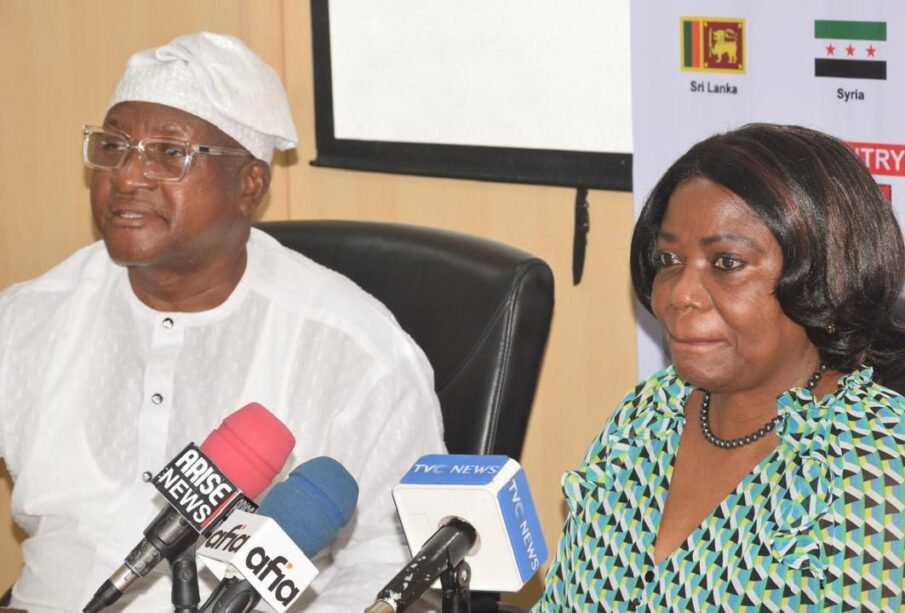
L-R: Media Consultant, Mr Tony Amokeodo and Global Economic Expert and Director of Intergovernmental Group of Twenty-Four on International Monetary Affairs and Development (G-24), Dr Iyabo Masha, during a press conference on G-24 2026 Technical Group Meeting in Abuja… on Saturday
The Director of the Intergovernmental Group of Twenty-Four on International Monetary Affairs and Development (G-24), Dr Iyabo Masha, has outlined the group’s agenda for its 2026 Technical Group meeting just as she disclosed that the ongoing tax reforms will support Nigeria’s transition into a modern and more efficient economy.
Masha, who is the first African to occupy the position since the establishment of the G-24 over five decades ago, disclosed this during a press conference in Abuja on Saturday,
According to the global economic expert, the G-24 Technical Group meeting will take place in Abuja from February 18 to 20, 2026 with the theme, “Mobilising Finance to Promote Sustainable, Inclusive, and Job-Rich Economic Transformation.”
Masha further disclosed that Nigeria, as Chair of this year’s G24 conference, will preside over discussions jointly hosted by the Federal Ministry of Finance and the Central Bank of Nigeria (CBN).
Providing background on the G-24, Masha said the group was founded during a turbulent period in global economics marked by weaknesses in the international financial architecture and trade disruptions that adversely affected developing countries.
She said, “The whole idea of forming the G-24 was to form a representative organisation of the largest economies in the Global South and have them be the voice of the Global South when it comes to negotiating and discussing with the advanced economies.”
She highlighted exchange-rate spill-overs as a key concern, saying, “The world is a dollar world.”
She added that developing countries also rely heavily on external financing, often from the International Monetary Fund and the World Bank, due to underdeveloped domestic capital markets.
The G-24, which has 29 member countries and several observers including multilateral institutions, is headquartered in Washington, DC, and holds ministerial-level meetings twice yearly on the side-lines of the IMF and World Bank meetings.
Masha explained that the Technical Group Meeting allows members to align positions ahead of those engagements while the hosting rotates among member states while she confirmed that “Nigeria is the chair country for this year”.
She also disclosed that about 45 delegates had confirmed attendance, with additional participation expected from relevant Nigerian agencies.
According to Masha, the programme will feature five panels, including one marking 80 years of the Bretton Woods institutions, which will assess achievements and future reforms of the IMF and World Bank.
Another panel will examine digital services taxation and domestic resource mobilisation, including how governments can better tax global technology firms.
“More importantly, on how countries can better tax the likes of Google, the likes of Facebook,” she added, noting that such companies often operate without physical presence in markets where they generate revenue.
Masha also said Climate change and energy transition will also feature prominently at the meeting, pointing out that oil-exporting developing countries face a complex balancing act.
She said, “Oil extractive industries are major sources of revenue, employment, and jobs in these countries. But on the other hand, they are now looking at how to move away from that and use more environmentally friendly sources of energy.”
Other sessions will focus on financial inclusion and monetary stability, as well as regional trade and integration.
Regarding debt sustainability, Masha acknowledged rising debt servicing pressures, especially since the pandemic, but pointed to the G20-backed Common Framework for restructuring. She said countries could use the framework to renegotiate external obligations and ease fiscal strain.
She said, “The important thing is for countries to manage their debt in a very sustainable way so that they don’t find themselves in a hard spot.
When asked on the issues of artificial intelligence and digital transformation, Masha said technological change could reshape global productivity and employment within the next decade.
Some member countries of the Intergovernmental Group of Twenty-Four on International Monetary Affairs and Development include Nigeria, South Africa, Ethiopia and Côte d’Ivoire from Africa; India, Pakistan, Sri Lanka and the Philippines from Asia; and Brazil, Argentina, Colombia, Peru, Guatemala and Mexico from Latin America and the Caribbean.
It is instructive to note that G-24 currently has 29 member countries that coordinate positions on global monetary, financial and development issues.
Speaking on tax reforms and development, Masha said tax and domestic resource mobilisation remain central to development, stressing that Nigeria’s reform drive could deepen formalisation and strengthen public finances over time.
She said, “Tax and domestic resource mobilisation is fundamental to economic development. Taxation enables governments to provide infrastructure, education, healthcare, and maintain law and order.
According to her, governments generally finance development through taxation, borrowing, or asset sales, but “out of all of these, taxation is the most efficient one that leads to the least macroeconomic destabilisation”.
On Nigeria’s tax reforms, Masha said that in her previous role she had examined the country’s tax framework and found it “very fragmented”, with inadequate implementation contributing to low revenue mobilisation.
She said, “My understanding is that this new tax policy seeks to address all those issues. It is bringing more companies into the tax net, though it is also increasing some rates of taxation.”
Masha also noted that certain capital taxation measures were “very interesting” and could incentivise more efficient production, saying that while reforms may be painful initially, they would yield long-term gains.
Founded about 54 years ago during a period of deep economic uncertainty, the G-24 emerged as a platform for developing countries to coordinate their stance on international monetary and development finance matters.
The circumstances that gave birth to the bloc, she noted, mirror today’s climate—marked by stress within the global financial architecture, trade tariff tensions and systemic imbalances affecting the global south.
With the headquarters in Washington DC, the G-24 typically convenes ministerial-level meetings on the margins of the World Bank and International Monetary Fund sessions. It uses those opportunities to harmonise positions and craft unified responses to outcomes from World Bank/IMF deliberations.
Now, with Nigeria in the chair and Abuja as host, attention shifts to whether the February summit will produce a sharper, more coordinated push for reforms in a global system many in the developing world argue remains tilted against them.



Leave a reply


The Editorial is a Platform for factual and precise news updates. Available to the readers 24/7 globally