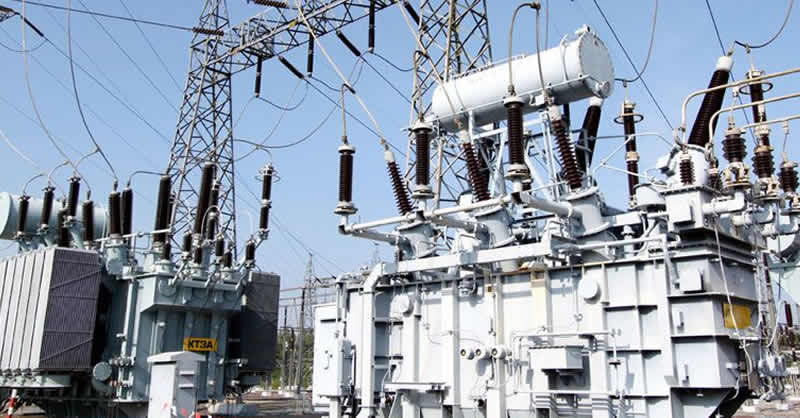
The Minister of Power, Adebayo Adelabu, has stated that the federal government is working on transitioning to a cost reflective tariff to stop an increase in the N4trn debt it owes the sector.
The minister who spoke during the Mission 300 Stakeholders’ Engagement meeting in Abuja, said this is part of reforms to set the power sector on the path of sustainability and bankability.
It would be recalled that despite the increase of electricity tariff for Band A customers, electricity consumers have complained of low electricity supply and continuous payment of faulty electricity installation.
But Adelabu said the decision is critical to the economic growth and development of Nigeria.
“Currently, there’s a huge outstanding debt to the power generation companies in the form of unpaid government subsidies which stands at about N4trn as of December 2024.
“The Federal Government is already working out modalities to defray this obligation and to ensure that further obligations are not accrued going forward, the government is working on a plan to transition the sector to a fully cost-reflective regime while implementing targeted subsidies for the economically vulnerable citizens in the country.”
The implication of this is that the government would end the subsidy regime in the electricity sector which would trigger an increase in tariff across board.
Daily Trust had also reported that the government had accrued N1.1tr as subsidy payment in the first six months of 2025 making its debt climbing to N5tr.
The minister in a statement by his media aide, Bolaji Tunji, said improving power generation through recovery of idle capacities and expanding energy mix to ensure energy security and to dilute the power pool with cheaper and cleaner energy sources would be a priority.
He announced the priorities of the government in power sector reforms to include “adressing the market liquidity issues and initiating required sector reforms”.
“Other areas included expanding transmission infrastructure to deliver more power, ensuring stability of the national grid to put an end to several grid disturbances and collapses previously observed on the grid, and to further strengthen the coordination and management of the national grid.
The Minister also said that the ministry is pursuing increased renewable energy through its rural electrification and energy transition drive, to provide a reliable power supply to unserved and underserved communities.
He said the stakeholders meeting would provide an opportunity for them to align, strategize, and to build the partnerships needed to move from Nigeria Energy Compact, to concrete results, as he called on development partners, the private sector, philanthropic actors, the public sector, and the civil society organizations to rally around this mission.
The Minister of Finance, Chief Wale Edun, who spoke through zoom from Brazil also said that the reforms the government was undertaking in the power sector were critical towards unlocking the full potentials of the economy as it would lead to job creation. He said the reforms have led to over 40 percent increase in power distribution in the first quarter of 2025.
The cost reflective tariff for Band A – Non-MD customers is N231.79 while the allowed tariff is N209.50, Band A – MD1, cost reflective tariff is N225.90 while allowed tariff is N209.50 similarly, cost reflective tariff for Band A – MD2 is N220.01 while allowed tariff is N209.50.
For Band B – Non-MD, cost reflective tariff is N223.94 while allowed tariff is N68.96; Band B – MD1 cost reflective tariff is N220.01 while allowed tariff is N67.18, Band B – MD2, cost reflective tariff tariff is N216.08 while allowed tariff is N67.12.
For Band C- Non-MD, cost reflective tariff is N209.32 while allowed tariff is N56.38; Band C-MD1 cost reflective tariff is N200.37 while allowed tariff is N54.64 and Band C – MD2 cost reflective tariff is N200.37 while allowed tariff is N54.64.
Band D – Non-MD cost reflective tariff is N164.34 while allowed tariff is N39.67; Band D – MD1 cost reflective tariff is N207.67 while allowed tariff is N55.4; Band D – MD2 cost effective tariff is N207.56 while allowed tariff is N55.43.
Lastly, Band E – Non-MD cost reflective tariff is N145.07 while allowed tariff is N39.44, Band E – MD1 cost reflective tariff is N207.35 while allowed tariff is N55.43 and Band E – MD2 cost reflective tariff is N207.35 while allowed tariff is N55.43.



Leave a reply





The Editorial is a Platform for factual and precise news updates. Available to the readers 24/7 globally