Sleaze in the season of subsidy [OPINION]
Bawa
By Simon Kolawole
After years upon years of legal back and forth, a special offences court in Lagos state recently jailed two subsidy fraudsters. Mamman, son of Ahmadu Ali — former chairman of the Peoples Democratic Party (PDP) who was once minister of education — was awarded 14 years imprisonment. Also to spend 14 years in prison is Mr Christian Taylor, his co-defendant. They were found guilty of collecting N2.2 billion in subsidy payments for “importing” 20 million litres of petrol when, in fact, they did not bring in even half a gallon. At the time of the offence, N2.2 billion translated to a cool $13 million. That was enough to buy a private jet — or address the little matter of buying drugs for our hospitals.
That was the story of petrol subsidy in Nigeria — when we went all out to “protect the poor” by burning scarce public resources on financing the ego and libido of the rich and the powerful. This is yet another conviction in the subsidy scam series since 2012, when President Goodluck Jonathan directed the Economic and Financial Crimes Commission (EFCC) to probe allegations of fraud. He had suspended the deregulation of the downstream sector in response to public protests against the increase in petrol price from N67/litre to N140 on New Year’s Day. He also reduced the price to N97 after a turbulent week of opposition-inspired “aluta continua”, Lagos and Kano being the epicentres.
As a result of the probe by the EFCC, three individuals and one company have now been convicted. In addition to Ali and Taylor, Brila Energy Limited and its representative, Rowaye Jubril, were convicted in 2017. Jubril was sentenced to 10 years imprisonment while Brila was ordered to refund nearly N1 billion to the government. Oluwaseun Ogunbambo, managing director of Fargo Petroleum and Gas Ltd accused of forging documents to claim N3.7 billion subsidy payment, remains on the run. These are just a few of the court cases over the scam. In the end, the total amount that was stolen under the policy “to protect the poor” ran into probably trillions of naira during the lifetime of the subsidy.
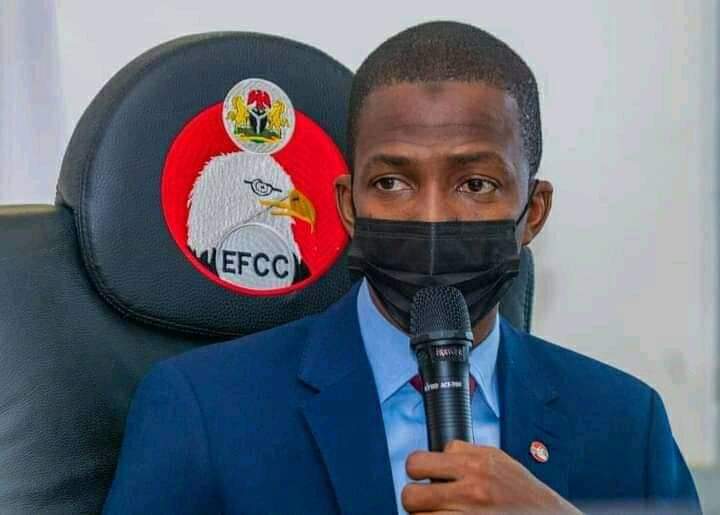
Mr AbdulRasheed Bawa, a member of the EFCC special team that probed the scam, has just written a book, ‘The Shadow of Loot & Losses: Uncovering Nigeria’s Petroleum Subsidy Fraud’, on the scandal. Bawa, who later became chairman of the EFCC, tells in heartbreaking details the monumental scam. The book reveals the extent of the evil that was visited upon this country in the name of petrol subsidy. It is a damning story, a story of the atrocious collusion by politicians, business moguls and government officials to rape the national treasury to stupor — through ghost importing, over-invoicing, manipulation of bills of lading, round-tripping, double claims, diversion and smuggling.
For those who may not know, I used to be a petrol subsidy fanatic. I started turning my back on it only in January 2012 when Jonathan unsuccessfully tried to end it. I saw and heard things that were not lawful to utter. I used to support petrol subsidy principally because of the notion that Nigeria as an oil-producing country should not be selling petroleum products at the same prices as non-oil producing countries. I used to argue that nearness to raw material should make a product cheaper, often illustrating it with the fact that tomato is cheaper in Keffi than Ketu. I was never impressed with the argument that oil, as a globally traded commodity, commands different pricing economics.
I vehemently opposed the argument that selling petrol cheaper in Nigeria was making smuggling to neighbouring countries a profitable and pleasurable enterprise. My counter-argument was that government was punishing ordinary, law-abiding Nigerians for its own failure to police our borders. I just believed petrol was too critical to the cost of living to be left to market forces. In fact, I said the only thing Nigerians were enjoying was petrol subsidy and all attempts to remove it must be fiercely resisted. For every argument in favour removing subsidy, I had a ready counter — whether or not it was viable. I did not realise I was aiding and abetting an organised crime of gargantuan proportions.
Theoretically, I am still pro-subsidy — I believe that all fingers are not equal and the government must step in to help the poor by “balancing the equation”. However, I now believe such funds should go into more impactful areas such as agriculture, health and education, not petrol. Bawa calculated, based on data from the Nigerian Midstream and Downstream Petroleum Regulatory Authority (NMDPRA) and the Nigeria Extractive Industries Transparency Initiative (NEITI), that we spent about N17 trillion on petrol subsidy from 1999-2023, viz: N812 billion (1999-2006), N794 billion (2007-2009), N3.9 trillion (2010-2014) and N11 trillion (2015-2013). This is not how to spend N17 trillion.
When President Bola Tinubu assumed office in May 2023, his first policy pronouncement was “subsidy is gone”. His predecessor, President Muhammadu Buhari, had not made any provision for subsidy for the second half of 2023. Tinubu effectively brought it forward by one month. The truth, of course, was that Nigeria was heading for ground zero. The NNPC had been importing petrol at N600/litre and selling it at roughly N190. The worst part was that in the past, we used to pay for subsidy from our oil earnings. However, from around 2020, we were actually borrowing to import petrol and sell at a third of the cost. We even mortgaged our future oil earnings to import petrol!
Still, anytime I reflect on the jump in the pump price from less than N200 to over N800 (it crossed the N1,000 mark at some point) in the past two years, I ask myself whether this is really happening. The consequences have been grim: high transportation costs for motorists and low-income earners, as well as high energy costs for businesses. The fall in the value of the naira compounded a dire situation for a country that relies heavily on imports, including pharmaceuticals, clothing, education and medical treatments. It was as if the whole world was going to crash on us. Yet, it was not as if we were left with many options. The economy was running on empty. We were close to liquidation.
When Tinubu marked his second anniversary in office, I read comments and analyses, both local and foreign, on his stewardship. The contradictory views are quite fascinating. The polices which some commentators are commending are the same others are condemning. Take, for example, his two most far-reaching policies: removing petrol subsidy and liberalising the FX market. While these policies have shot the cost of living to the highest in a generation, they have also tackled a regime of corruption that had been damaging the economy for decades. And while many economists and investors are taking to the dancefloor in pleasure, the less privileged are reeling on the floor in pains.
Although I was critical of the way and manner Tinubu went about his twin policies (which I thought and still think were neither well planned nor properly executed), he took a decision that had been very difficult for past presidents. Some would take the decision and quickly backtrack after the public backlash and labour strikes. What I have found more intriguing today is that petrol can be N900/litre this week and N875 next week. When oil prices change, the prices of petroleum products react. The FX market is now following the same pattern — the naira is going up and down from time to time, just like major currencies. With no fixed rate, many speculators are now in the middle of nowhere.
Tinubu’s policy seems to be: “no subsidy, no subsidy scam”. You can’t claim payment for what doesn’t exist. Bawa’s revelations are, for me, a final nail in the coffin. Not even one kobo should ever go into petrol subsidy again. We have crossed the Red Sea and must never go back to Egypt. The next challenge is for Nigerians to start holding their leaders accountable and responsible for a judicious use of the “savings” since there are no more deductions for subsidy from the federally collected revenues. The NNPC can no longer withhold revenues from the federation account under the nebulous headline of “subsidy deductions” — although I know we are still paying some legacy bills.
Above all, it is now left for us, as active citizens, to make it a duty to put the president, governors and council bosses under the spotlight, to make sure these “saved” funds are targeted at providing amenities that will benefit most Nigerians, especially the poorest of the poor, amenities that we can feel and touch (not “audio”), amenities in healthcare, education, roads and other critical infrastructure that will be impactful and meaningful. I don’t think we need to be begged to be more active. Otherwise, of what benefit is abolishing subsidy only to spend the savings on waste and graft? That would mean we are suffering for nothing. Our latter days could end up worse than the former.
Culled from TheCable


Leave a reply


The Editorial is a Platform for factual and precise news updates. Available to the readers 24/7 globally