
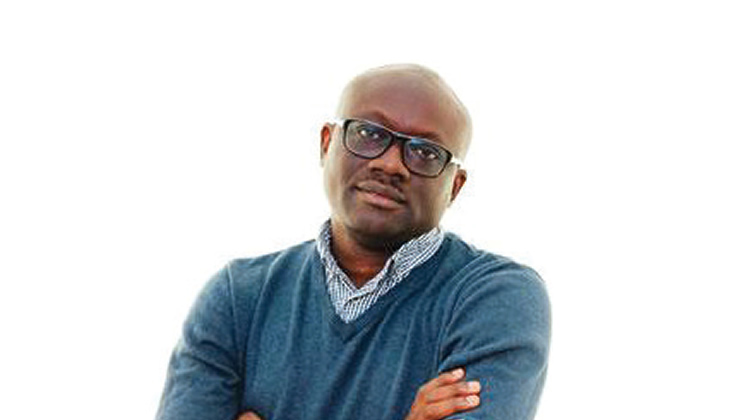
Simon Kolawole
By Simon Kolawole
There you have it. In an interview with ARISE TV on Wednesday, Alhaji Atiku Abubakar confirmed the worst-kept secret in politics: that he is going to join the 2027 presidential race. The former vice-president, the driving force behind adopting the African Democratic Congress (ADC) as the platform to rally the opposition against the All Progressives Congress (APC), also promised that this would be his last attempt — most likely, since he will be 80 by 2027 and 84 by 2031. His proposal all along has been to do one term and support power shift to the south in 2031. He has promised to sponsor an amendment to the constitution to provide for rotational presidency should he be elected president.
A lot has been said about Atiku’s presidential ambition. He has been trying to actualise his dream since 1993, and he must think 2027 is his brightest chance ever. To be fair, he also thought 2023 was his brightest chance ever, given that there was no incumbent to compete with and he was the biggest northerner in the race, whereas the south had Asiwaju Bola Tinubu (APC) and Mr Peter Obi (Labour Party). By simple calculations, the south would divide its votes and Atiku would have coasted home with the voting power of the north. It didn’t work out like that: his party, the Peoples Democratic Party (PDP), ran into a crisis. That apart, Tinubu deployed his clout to upstage him.
But Atiku will look at 2027 differently as an optimist. Tinubu’s consequential economic reforms might be generating macro-economic positives, but there are significant micro-economic pains on the streets where the votes are domiciled. The economic hardship is something any politician will capitalise on any day — and this is something that the opposition will seek to exploit in 2027. There is an added edge for Atiku: Tinubu is seen in many parts of the north as pursuing an anti-north agenda. Islamic clerics are arguably the most powerful influencers of northern voters, and some are rigorously preaching against Tinubu. Atiku will hope to be the chief beneficiary of the discontent.
In selling his credentials, Atiku told Mr Charles Aniagolu, the ace ARISE TV anchor, that he is more popular in the north than Dr Rabiu Musa Kwankwaso, Rt Hon Aminu Waziri Tambuwal and Mallam Nasir el-Rufai. But is this statement necessary at a time the ADC is still struggling to find its feet? But he can make the claim on the basis of his electoral pedigree. He was the PDP candidate in the last two elections, garnering 5.2 million northern votes in 2019 and 4.8 million in 2023. Kwankwaso got only 1.5 million northern votes as candidate of the New Nigeria Peoples Party (NNPP) in 2023. Tambuwal and el-Rufai have not run in national elections, so we don’t have any data on them.
Asked if he would step down for any aspirant, specifically Obi, Atiku categorically said he would not — but promised to support whoever is nominated either through consensus or primary election. I was not surprised. Atiku did not adopt the ADC or support Senator David Mark to be chairman in order to step down for anybody. A section of Obi’s supporters, popularly known as Obidients, have launched attacks on Atiku on social media. They said if Obi was not given the ADC ticket, they would not vote and Tinubu would inevitably get a second term. Some even threatened to vote for Tinubu and APC in protest. Many argue that Obi is the only presidential hopeful who can defeat Tinubu.
In fact, some said Obi/Kwankwaso is the ticket the APC fears the most. My reading is that they want Obi to be the consensus candidate of the ADC without going through a primary election and they see Atiku as the biggest obstacle on this pathway. Somehow, I would not agree that Atiku is the only barrier between Obi and the ADC ticket. Rt Hon Rotimi Amaechi, we must remember, is also a presidential aspirant. Would he agree to endorse Obi as the party’s consensus candidate? The Electoral Act 2026 mandates all aspirants to agree in writing that they had endorsed one aspirant for consensus candidature to be legally binding. If one aspirant dissents, then there must be a primary.
Amaechi, we may recall, came second to Tinubu in the APC primary in 2022, outscoring Prof Yemi Osinbajo, the sitting vice-president. He is, therefore, a factor in the ADC. And he is also from the south, in the event that the party agrees to zone out northerners in the race for its presidential ticket. Amaechi has also built bridges (or is it railways) across the country, having been a state speaker, governor, chairman of the Nigeria Governors Forum (NGF), and minister. He is not a political Lilliputian as my rep, Hon Leke Abejide, tried to portray him on TV the other day. That Amaechi’s supporters are not that vociferous on social media does not mean he is a pushover. Just saying.
I sense that Obi’s supporters are not confident enough that he can win the ADC primary. Otherwise, they would be challenging Atiku to “bring it on”. They think Obi is more popular on the streets but may not be able to navigate the “dirty” terrain of primaries, where — truth be told — “shishi” is a potent currency more often than not. Given that Obi’s group was the last to join the ADC “coalition”, they may not be in a position to choose a direction for the party. They seem to be banking on the youth demography to make their case, something like “we are the ones that will vote in the general election after all”. In other words, “give the ticket to the man Nigerian youths are dying to vote for.”
All these assumptions are debatable, of course, but I also understand where the Obidients are coming from. Many of them sincerely believe in Obi. They see him as someone who is not like other Nigerian politicians, someone who will carry his own suitcase, someone who will not waste or steal public funds. They see him as the one that will banish poverty and unemployment with a snap of the finger. Obi himself is intelligent enough to know that human and economic development does not happen overnight, but it does not hurt his profile for his supporters to continue to market him as the ultimate solution to Nigeria’s economic, political, security and other nation-building challenges.
Many Obidients want Atiku to play the “statesman” by working for Obi, but they are not asking nicely. Some of the comments I read after Atiku’s interview were full of bile, which, I would suppose, is not the best way to persuade anyone to support your choice. This thing called democracy has many ramifications, including freedom of choice. Blackmail and intimidation are not always useful in certain situations where the call is not yours to make. In my opinion, Obidients would do well by joining the ADC in their millions to vote for Obi in the presidential primary since they believe they have the numbers. It is direct primary — meaning every party member will vote. Do they know this?
Atiku has used just one interview to assert himself in the ADC. In one blow, he tried to degrade the political weight of Kwankwaso, Tambuwal and el-Rufai and also sought to douse the enthusiasm of the firebrand Obidients. Ironically, I don’t think Obi himself would mind being Atiku’s running mate, thereby hoping — I believe — to be in a position to succeed him in 2031 based on the rotational presidency promissory note. But there is Obi and there are Obidients. They live in two different worlds and are engaged in a marriage of convenience, where the tail always insists on wagging the dog. This is the biggest challenge Obi will face after the ADC primary if he does not get the ticket.
But there is an elephant in the room: does Atiku seriously believe in power rotation? On the basis of evidence, I would say no. Since 2003, he has always wanted to be president, no matter the part of the country laying claim to it. He briefly toyed with the idea of running against President Olusegun Obasanjo in the PDP primary in 2003 until a last-minute armistice. In 2007, after being pushed out of the PDP by Obasanjo who did not want him to be his successor, Atiku ran on the platform of the Action Congress (AC), the opposition party floated by Tinubu. Atiku came third behind PDP’s Alhaji Umaru Musa Yar’Adua and Maj Gen Muhammadu Buhari of the All Nigeria Peoples Party (ANPP).
Atiku tried to run against President Goodluck Jonathan in 2011 but lost in the PDP primary. He gave it a shot again in 2015 but came third in the APC primary behind Buhari and Kwankwaso. In 2019 and 2023, he flew the flag of the PDP. When Aniagolu asked him about the south completing its turn after Buhari had done eight years, Atiku said the south has been in power for longer than the north since 1999. Does that mean his power rotation promise is just political talk? Atiku also talks as if only the north will vote in 2027. Buhari made this mistake thrice before retracing his steps in 2015. Atiku sounds extremely confident as if the 2027 presidential election would be a walk in the park. Hubris?
Culled from TheCable

Leave a reply


The Editorial is a Platform for factual and precise news updates. Available to the readers 24/7 globally