
Petrol price edges towards N1,400/L
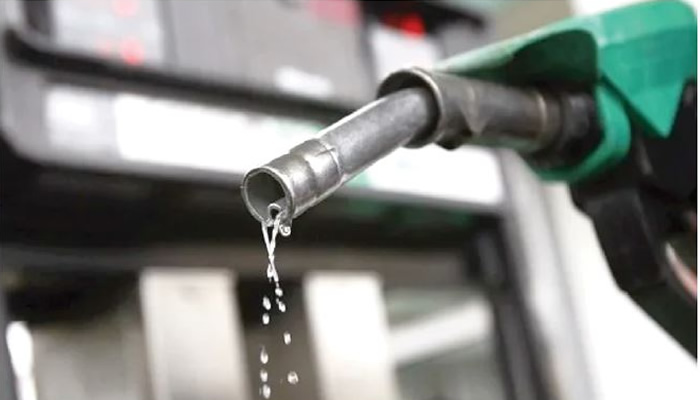
Petrol pump
The pump price of Premium Motor Spirit (PMS), commonly known as petrol, edges close to N1,400 per litre in several parts of the country following latest price increase in pump price by the Dangote Refinery.
Across Lagos, Kano, Kaduna and Abuja, a cross-section of Nigerians expressed concern over the relentless surge in fuel prices, warning that the situation is fast becoming unsustainable.
The development followed the rising prices of crude oil which continued to surge as the hostilities between the US-Israel and Iran linger, pushing up Brent Crude to $119 on Wednesday.
However, Brent crude eased yesterday, dropping to $110.9 per barrel.
As the crude oil prices surged in the last few days, Dangote Refinery on Thursday reviewed its gantry price upward from N1,200 to N1,275 per litre, while coastal supply prices climbed to N1,215 per litre, according to price data obtained from Petroleumprice.ng.
Diesel price has been increased to N1,800 per litre, up from N1,750, as the Refinery has also suspended loading operations at the facility, the report quoted sources, including those at the Refinery.
In response to the latest increase, marketers swiftly responded by increasing pump prices with reports across the country indicating that a litre is almost N1,400 per litre.
In Lagos, checks at multiple filling stations revealed that petrol prices have climbed sharply within days. Nigerian National Petroleum Company (NNPC) retail outlets were dispensing fuel at about N1,325 per litre, while independent marketers such as MRS sold at around N1,335 per litre. In some locations, prices rose further to N1,350, reflecting a 9.3 per cent increase from approximately N 1,250 recorded earlier in the week.
At stations along the Mile 2–Badagry Expressway, motorists were seen queuing reluctantly, many purchasing minimal quantities to manage costs. For transport operators, the implications have been immediate and severe.
Tunde Iladi, a commercial driver operating between Yaba and Ojota, said the rising cost of fuel has significantly eroded his daily earnings.
“The incessant increase in the price of fuel is not good at this moment because its impact is becoming unbearable,” he lamented. “The price keeps going up, and we don’t understand why. It is affecting our income badly.”
Iladi described the trend as “escalating” and called on the Federal Government to intervene urgently to ease the burden on citizens.
Similarly, another driver, Festus Oke, said the situation leaves little room for profit. “At the end of the day, it feels like everything I earn goes back into buying fuel,” he said.
The impact of rising fuel prices has quickly spilled over into transportation costs. Across Lagos, commercial bus operators have adjusted fares upward, citing the need to remain in business.
Passengers now face higher costs for daily commuting, with some routes recording fare increases of over 50 per cent. Workers and small business owners say the hikes are stretching already tight budgets.
Market traders also reported declining patronage, as consumers cut back on spending due to higher living costs. The ripple effects are being felt across supply chains, with logistics expenses rising sharply.
In Kano, the situation appears even more dire, with pump prices reaching as high as N1,480 per litre at some filling stations. At a Ranoil station near the Federal Road Safety Corps (FRSC) headquarters, the steep price has discouraged patronage, with only a handful of vehicles seen during visits.
However, NNPC retail outlets in the city offered relatively lower prices at around N1,370 per litre, attracting long queues of motorists, particularly commercial tricycle operators.
Ali Sabo, a resident, recounted how he managed to buy fuel at N1,310 earlier in the day before prices were adjusted.
“I was lucky to get it at that price because they had not updated it yet,” he said, adding, “If I had more money, I would have bought more because the price keeps rising unpredictably.”
Another Kano resident, Ahmed Sanusi, said the situation is forcing him to reconsider his reliance on petrol-powered vehicles.
“I am already thinking of abandoning my car,” he said. “Maybe it is time to consider alternatives like electric bikes. Fuel is taking all our income.”
In Kaduna, residents highlighted not only the rising fuel costs but also unethical practices at some filling stations. Maimuna Sani, a car owner, said inaccurate dispensing by fuel attendants has worsened the hardship.
“You pay for a certain amount, but you are given less,” she said, adding, “So, it’s not just the high price—we are also being shortchanged.”
She noted that while Nigerians are gradually adjusting to the new price realities, many have been forced to abandon private vehicles and rely on commercial transport.
For others, even public transportation is becoming unaffordable. Umar Ramalan, a resident of Malali, said transport fares have surged significantly.
“The fare from NDA bus stop to the market used to be N200, but now it is N300,” he said, adding, “And with fuel nearing N1,400 per litre, we don’t know how much it will increase again.”
He added that the situation is particularly concerning with festive travel approaching.
“With the Eid celebration coming, many families may not be able to travel home. The cost is just too high.”



Leave a reply


The Editorial is a Platform for factual and precise news updates. Available to the readers 24/7 globally