
Prioritise investment, reposition Nigeria in global affairs, Tinubu tells new ambassadors
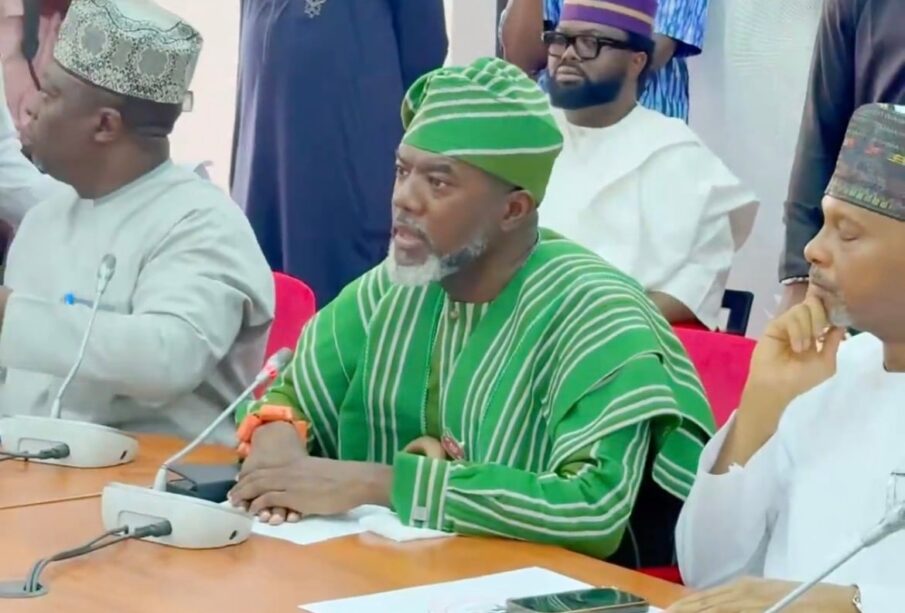
Reno Omokri (middle) introducing himself, during his screening for an ambassadorial position, at the senate
President Bola Tinubu has urged Nigeria’s newly appointed ambassadors and high commissioners to “aggressively pursue foreign investments, strengthen strategic partnerships and reposition the country in global affairs.”
On November 29, 2025, Tinubu sent the names of 32 ambassadorial nominees to the senate for confirmation.
The list included Reno Omokri, former presidential aide; Mahmood Yakubu, former chairman of the Independent National Electoral Commission (INEC); and Femi Fani-Kayode, former aviation minister.
Days earlier, the president had asked the senate to confirm the appointment of three non-career ambassadors.
The nominees were Kayode Are from Ogun state, Aminu Dalhatu (Jigawa), and Ayodele Oke (Oyo).
On December 18, 2025, the senate confirmed the appointment of 64 ambassadorial nominees, comprising 34 career ambassadors and 30 non-career envoys.
Speaking on Monday at the opening of an induction course for the ambassadors at the federal ministry of foreign affairs in Abuja, Tinubu said the appointments reflected his administration’s confidence in the envoys’ capacity to advance Nigeria’s interests on the international stage.
Represented by George Akume, secretary to the government of the federation (SGF), the president noted that the global system is undergoing rapid transformation driven by shifting geopolitical dynamics, economic uncertainties, technological disruptions, climate challenges and emerging security threats.
According to a statement issued by Yomi Odunuga, special adviser on media and publicity to the SGF, Tinubu said these developments have made the role of diplomats more critical than ever.
“The international system is evolving rapidly. We must be prepared to meet these challenges by focusing on how best to protect and promote Nigeria’s national interest,” the president said.
He urged the envoys to “adopt a modern, results-orientated approach to diplomacy, combining traditional methods with digital engagement, public diplomacy and strategic communication.”
Tinubu also stressed the need to project Nigeria’s story effectively while highlighting the achievements of his administration’s renewed hope agenda.
He charged the diplomats to be “proactive and innovative in fostering partnerships, promoting trade and attracting foreign direct investment and technology to Nigeria.”
The president said safeguarding the welfare of Nigerians in the diaspora must remain a top priority.
He further announced that Nigeria’s foreign policy framework known as the “4D doctrine” would be reordered from democracy, development, demography and diaspora to demography, development, diaspora and democracy.
“This re-ordering has put the Nigerian people at the centre of our foreign policy agenda and is aimed at harnessing outcomes for their maximum benefit,” he said.
He noted the need for professionalism, integrity and patriotism in diplomatic service, adding that envoys are not only government representatives but also custodians of Nigeria’s image abroad.
“You have a special responsibility in helping to reposition Nigeria in global affairs. The world is watching,” Tinubu said.
He emphasised accountability, urging missions to be result-driven, prudent in resource management and guided by clear, measurable goals that contribute to economic growth and national development.
The president encouraged participants to fully engage in the induction programme, saying it was designed to equip them with the skills required for effective diplomatic service in a rapidly changing world.
He also commended the national assembly for the swift confirmation of the nominees and urged the envoys to justify the confidence reposed in them.



Leave a reply


The Editorial is a Platform for factual and precise news updates. Available to the readers 24/7 globally