
Yemen’s Houthis launches missiles towards Israel, demands stoppage of attacks on Iran
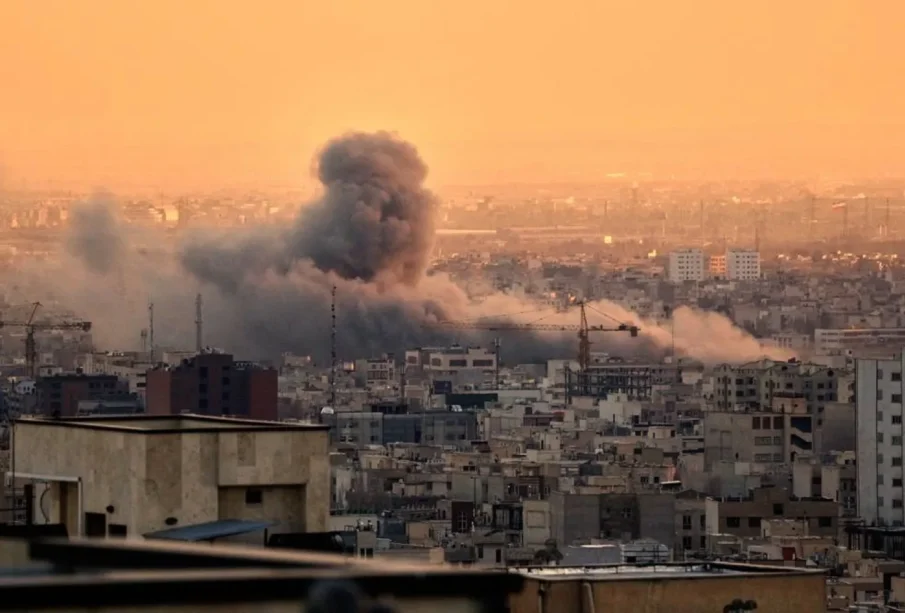
Tensions grew further on Saturday in the war in the Middle East when Yemen’s Houthis launched a missile toward Israel, targeting military sites in the West Bank.
The Israeli military confirmed detecting the missile, while the Houthis said the strike was in retaliation for ongoing attacks on Iran, Lebanon, Iraq, and Palestine.
Houthis warned that warning that the operations would continue until the US and Israel stop aggression.
The entry of the Houthis into the conflict signals a possible new front in the ongoing war.
The United States-Israel-Iran war is now at Day 29 with violence spreading and casualties rising across the Middle East.
The attacks on major gas facilities in four countries have also worsened the economic impact of the war.
At the same time, Israel carried out strikes on Iranian infrastructure linked to nuclear energy and uranium enrichment. Targets included a uranium processing facility in Yazd, a plant for extracting raw materials for uranium enrichment, and areas near Isfahan’s nuclear facilities.
Iran’s Atomic Energy Organization confirmed the attacks but reported no casualties, radiation leaks, or technical damage, including near the Bushehr Nuclear Power Plant.
Iran’s Foreign Minister Abbas Araghchi vowed that Israel would pay a “heavy price” for attacking its nuclear and industrial sites. He stated that Israel struck two of Iran’s largest steel factories, a power plant, and civilian nuclear facilities, allegedly in coordination with the US.
The Iranian Revolutionary Guard Corps (IRGC) advised employees at industrial sites with American shareholders or links to Israel to leave their workplaces immediately, as retaliation plans were being prepared.
President Donald Trump expressed disappointment with NATO for failing to support the US and Israel, especially in efforts to reopen the Strait of Hormuz.
Speaking at a business conference on Friday, he said, “I’ve always said NATO is a paper tiger. And I always said we help NATO, but they’ll never help us.”
At the same time, US Secretary of State Marco Rubio said the US does not need ground troops in Iran to achieve its objectives and claimed the mission could be completed within weeks.
Casualties continue to rise. Iranian strikes on Prince Sultan Air Base in Saudi Arabia injured 12 American soldiers, bringing US casualties to at least 13 killed and over 300 wounded. In the wider region, more than 1,900 Iranians have been killed and 24,800 injured, while 1,142 people have died and 3,315 injured in Lebanon, according to the Lebanese Ministry of Health.
The United Nations has formed a task force to ensure safe passage through the Strait of Hormuz, aiming to maintain the flow of humanitarian goods.
UN Secretary-General António Guterres announced the initiative, and UN Undersecretary Jorge Moreira, who leads the task force, said, “Our goal is to create a mechanism for safe, orderly, and predictable maritime transit for humanitarian purposes… Disruptions in trade through the Strait risk impacting humanitarian needs and agricultural production in the coming months. We are standing by to support this lifesaving operation.”
The conflict is now spreading beyond its original scope, with new actors joining and major strikes hitting Iran, increasing the risk of a broader regional war while humanitarian concerns and casualties continue to mount.




Leave a reply


The Editorial is a Platform for factual and precise news updates. Available to the readers 24/7 globally