
Kwankwasiyya to Atiku: Only Obi, Kwankwaso enjoy organic support
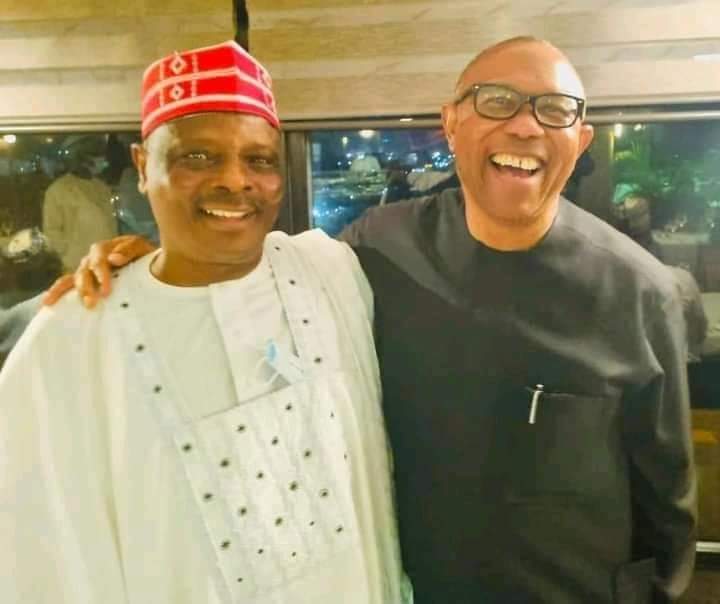
Obi and Kwankwaso
The Kwankwasiyya movement has pushed back against recent remarks by Atiku Abubakar, suggesting a decline in Rabiu Musa Kwankwaso’s political dominance in Kano.
This is coming amid jostling for the presidential ticket of the opposition coalition, African Democratic Congress (ADC) .
Dismissing assertions by Atiku, the movement declared that only Peter Obi and Kwankwaso enjoy “organic” nationwide followership.
Spokesperson of the Kwankwasiyya movement, Hon. Habib Mailemo, said this while on Trust TV.
Tinubu to critics: We’ll give eyeglasses to those who can’t see our achievements
Olisa Metuh appointed Director of Pro-Tinubu campaign
The aide argued that the followership enjoyed by Obi and Kwankwaso is rooted in personal conviction rather than political inducement or entrenched party structures.
“It is only Peter Obi and my principal, Alhaji Rabiu Musa Kwankwaso, that have organic followers that are not induced by anything. Their aspirations align with the belief in their competence and proven track records, and the masses identify with them”, he said.
He added that the current political discourse should be focused less on personal supremacy and more on the broader objective of national recovery, noting that Kwankwaso’s involvement in coalition talks was driven by a singular goal.
“My principal has made it very clear that we are going into the coalition simply because his sole intention is to contribute to rescuing Nigeria,” he said.
Responding to a question on whether Kwankwaso enjoys greater popularity in the North than Atiku as claimed by the former Vice President, the aide acknowledged Atiku’s long-standing presence in Nigeria’s political landscape but argued that his electoral strength has often been tied to party machinery rather than individual appeal.
“It is true that Atiku has contested multiple times, particularly under the PDP where he had the backing of governors and a strong structure. But he cannot solely attribute the votes he garnered to personal popularity, given the elite consensus and broad political support within that fold at the time”, he said.
Drawing a contrast, he maintained that both Obi and Kwankwaso built momentum independently of dominant party frameworks.
“I am giving you a different scenario where Peter Obi and Kwankwaso stood on their own and became synonymous with the parties they joined, largely because of their personal popularity.
“They made significant impact in elections where they were not initially considered strong contenders”, he noted.
He argued that a fair comparison with Atiku would require a similar political test.
“If he had contested under a platform without an established structure and built it into a formidable force as they did, then we could properly assess the strength of his personal appeal,” he added.
The aide also cited historical precedent to underscore the role of political structures in electoral success, referencing the emergence of the late President Umaru Musa Yar’Adua.
“Yar’Adua may not have been the most popular at the time, but with a strong party structure and broad-based support, he emerged president. Anyone with such backing is likely to secure substantial votes”, he stated.
On concerns that such remarks could deepen divisions within the opposition at a time calls for unity are growing, the Kwankwasiyya figure said coalition actors must engage in honest internal evaluation rather than suppress differing views.
“The expectation is that key figures within the coalition, including Atiku, Obi and Kwankwaso, should come together, understand themselves, and conduct a proper analysis of their strengths. That is the only way they can arrive at a credible position to challenge the ruling government and offer Nigerians a viable alternative.”
Daily Trust reports that the response comes against the backdrop of Atiku’s recent comments in which he pointed to shifting political dynamics in Kano, the traditional base of Kwankwaso.
He noted that the state’s voting strength is now divided.
“Well, the absence of it may affect, but even in his own case, you can see how Kano is now split between himself and his former governor,” Atiku said, in a remark widely interpreted as questioning Kwankwaso’s political dominance in the state.
Atiku, a former vice president, has also been positioning himself as a unifying figure within the emerging coalition, pledging to support any consensus candidate that emerges through a democratic process.
“Yes, I will step aside for any winner,” he said when asked about the possibility of backing another aspirant.
Pressed specifically on whether that would include Obi, he responded: “Of course, if he is a contender, why not? What is difficult there? It is democracy.”

Leave a reply


The Editorial is a Platform for factual and precise news updates. Available to the readers 24/7 globally