
Civil War: How Obasanjo defied my orders to serve under Murtala, says Gowon
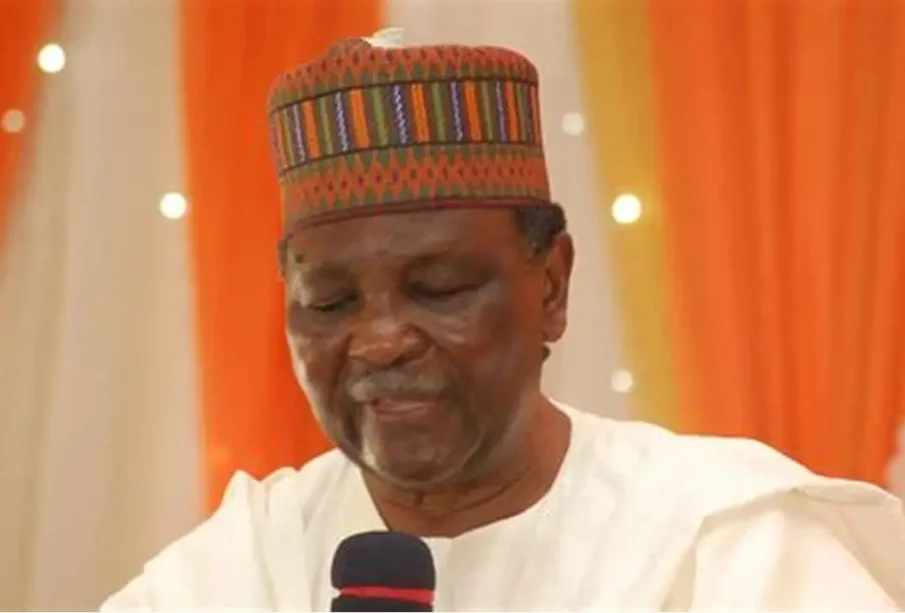
Gowon
Former Head of State, Gen Yakubu Gowon (retd.), has revealed that a young Olusegun Obasanjo flatly refused to serve under Col Murtala Muhammed during the Civil War, declaring he would “never” take orders from his junior.
Gowon said he resolved the confrontation by invoking his authority as Commander-in-Chief and forcing Obasanjo to stand down, before going on to serve as Obasanjo’s personal “guardian angel” through the war and beyond.
The revelations are contained in Chapter 14 of Gowon’s 859-page autobiography, ‘My Life of Duty and Allegiance,’ titled ‘No Going Back,’ obtained by our correspondent at the book’s launch in Abuja on Tuesday.
Gowon also revealed that Biafra’s leader, Lt Col Odumegwu Ojukwu, secretly pawned the mineral wealth of Biafra to the Rothschild banking family for approximately $10m, or an estimated N5m at the time, in exchange for French-backed support for the secessionist effort.
Gowon said he first encountered Obasanjo at the Officers’ Mess in the United Kingdom in March 1958, when both men were undergoing officer training.
According to the book, Gowon, short of money and unable to settle his bills on arrival in London, turned to two fellow Nigerian officers, Obasanjo and a Lagos-born officer named Foluso Sotomi, to assess who might help him.
“Whereas Obasanjo was a frugal person, Sotomi was a spendthrift and, as his nickname confirmed, a typical Lagos ‘Show Boy’ who looked smarter but was more of a bigmouth and certainly more bombastic than Obasanjo,” Gowon wrote.
When he approached Sotomi, the man had no money to spare.
“Obasanjo, on the other hand, was much different. He had more than enough money to pay for himself and to offset my initial bills. I saw that as a great display of a sense of responsibility,” the former Head of State said.
That first impression, Gowon wrote, converted into a sustained personal investment in Obasanjo’s career that would last through the Civil War and into the post-war period.
He said, “That singular act made me take more interest in Obasanjo and what he did. I advised him to ensure that he remained on the right track in the Army.
“I became his informal guardian angel right up to the time I appointed him to take over the command of 3 Marine Commando from (Benjamin) Adekunle.”
Gowon said he observed Obasanjo closely from the beginning, forming a clear-eyed assessment that is candid about his limitations as well as his strengths.
“Obasanjo was a quiet, respectable and intelligent officer, though not quite as smart as, for example, the younger Alani Akinrinade to whom I took instant liking whilst he was a cadet officer at my alma mater, the Royal Military Academy, Sandhurst,” he wrote.
Gowon then revealed the standoff between Obasanjo and Murtala, which he described as playing out during the opening phase of the Civil War.
The former head of state had decided to create a Rear Command for the newly formed 2 Division under Murtala Muhammed, with Obasanjo, then Sector Commander in the Western State, serving as Rear Commander in Ibadan, helping to organise relief supplies, equipment and reinforcements.
The arrangement would technically place Obasanjo in a supporting role under Murtala.
Obasanjo, Gowon wrote, did not take it well.
“He believed he was more senior and should not be expected to serve under his junior.
“His reaction made it obvious that he was not well disposed to any idea that appeared to present him as playing second fiddle to Murtala.
“As a result, he strongly stated that he would never serve under Colonel Murtala Muhammed for any reason,” he narrated.
Gowon says Murtala’s own reaction to the arrangement similarly revealed something important about the future head of state’s character.
“His reaction also clearly showed that Obasanjo would have serious misgivings about being 2-I-C even to himself,” he recalled.
But the Commander-in-Chief held firm.
“I stood my ground that, as Commander-in-Chief, I reserved the right to send people to where I believe they could be most useful to the country at any material time.
“I told him his main task was not to be Murtala’s deputy but to ensure the general security of the Western Region. He relented and took on the role assigned to him,” Gowon wrote.
Gowon added that despite the inauspicious start, Obasanjo “indeed performed well to my expectations,” specifically by rebuffing a remarkable covert attempt by Nobel laureate Wole Soyinka to use the posting to open a passage for Colonel Victor Banjo to enter the West.
“He performed well to my expectations, especially by rebuffing Wole Soyinka’s attempt to get him to allow Colonel Victor Banjo to come to the West through Benin to Ibadan. I deeply appreciate Obasanjo’s loyalty and sense of patriotism.”
Gowon also disclosed details about the Ojukwu-Rothschild deal.
He wrote that as the war intensified, France provided the rebel government with enormous support through the former African territories it controlled, with the backing provided in exchange for what France hoped to gain from a successful Biafran breakaway.
The true depth of the transaction, he said, only became known when the Nigerian Consulate in New York intercepted intelligence on a B-26 aircraft purchase routed through a South American country.
“It later emerged that this was in exchange for what they had hoped to gain from him in the event of a successful breakaway from Nigeria,” Gowon narrated.
He added, “Indeed, he had pawned the mineral wealth of Biafra to Rothschild for about $10m or an estimated N5m at the time.
“Our knowledge of this deal was fortuitous because the Nigerian Consulate in New York had intercepted information regarding the purchase of a B-26 aircraft that was to have been sent to Biafra through a South American country.”
The intelligence was relayed to Lagos by Moses Ihonde, who would go on to become Gowon’s Press Secretary, dispatched personally by Consul General Simeon Adebo after negotiators in the aircraft deal had approached the New York consulate for information on exchange rates.
The chapter also contains Gowon’s account of his decision to appoint Murtala as Commander of the 2 Division, describing him as his “preferred choice” who “displayed extraordinary zeal and courage” in taking on the assignment, while acknowledging that Murtala “often allowed his emotions to get the better part of him.”
Murtala would later overthrow Gowon himself in the 1975 coup.
Why Nigeria turned to Soviets for arms
Gowon also revealed that the refusal of the United States and Britain to supply arms to Nigeria during the civil war drove his government into the arms of the Soviet Union and a Lebanese black-market businessman.
He said the two unlikely lifelines eventually turned the tide of the three-year conflict, which raged from July 1967 to January 1970.
The revelations are contained in Chapter 15 of the autobiography.
The chapter, titled “If The Devil’s Ready To Help,” chronicles Gowon’s desperate search for weapons as Nigeria’s ammunition stockpile collapsed to half a million rounds for the entire Army by late 1968.
He said the stockpile was insufficient to sustain operations, while traditional Western allies remained aloof.
He wrote, “As the weeks of fighting wore on, our stock of ammunition was steadily depleted by these wastes, and we could not replenish them because international sales restrictions prevented suppliers from selling military hardware to Nigeria.
“Left with no choice, I ordered the federal troops to hold their position after the capture of Enugu up to Okigwe and Umuahia because I could not, in clear conscience, commit them to further advance knowing that the ammunition to sustain the effort was in short supply.”
Gowon said he was particularly stung by the contrast between the inaction of the Western allies in Nigeria and their aggressive military posture in Vietnam and Cambodia, where American air power was being deployed at scale.
He sought out the British and American ambassadors in a meeting he described as one of the most consequential of the war.
About the meeting, he said, “If I say I’m not disappointed, it will be an understatement.
“I, however, left them in no doubt that I had a duty and responsibility to keep Nigeria united and safe for all Nigerians and other nationals resident in Nigeria.
“As they were about to enter their cars, preparatory to leaving the State House, I said, if I say I’m not disappointed, it will be an understatement, so I will go to any devil to get what I need to deal with the problem, to do my duty to my country, and when that happens, I hope I will not be accused of doing something wrong.”
Both ambassadors left without any commitment, Gowon said.
However, the former Head of State said he had already decided on his next move.
He directed his Principal Secretary, Hamza Ahmadu, to contact the Soviet Ambassador, Mr Aleksandr Romanov, at Dodan Barracks.
He said Moscow’s willingness to supply arms could serve as the lever that forced Britain and America back to the negotiating table.
A Nigerian delegation led by Commissioner for Information, Anthony Enahoro, Permanent Secretary Edwin Ogbu, Chief of Air Staff Emmanuel George Kurubo and Amb John Ukegbu was promptly dispatched to Moscow.
“The Soviet Union supplied us some MiG-15 trainers and MiG-17 bombers for the meeting, which was a huge success,” he wrote, adding that Soviet-Nigerian relations grew into something “special” in the aftermath of the war, a warmth that had been purchased by Western indifference.
According to him, Moscow alone could not solve the immediate ammunition crisis.
For that, Gowon said he turned to Ali Jamal, a Lebanese businessman with access to the black market for military hardware, “who strongly believed in Nigeria” and who offered to personally finance the procurement of ammunition and equipment, asking only to be reimbursed interest-free once the government could pay.
“Jamal was not deterred even after I told him that I had no money with which to make immediate payments for the purchases.
“He told me not to worry and that he would use his own money to provide the ammunition we needed, but would want to be reimbursed interest-free at the shortest possible time.
“With his support, we were able to get some of the hardware and the ammunition we needed to change the face of the war,” Gowon wrote.
But the arrangement nearly collapsed at the Federal Executive Council when Finance Commissioner, Chief Obafemi Awolowo, refused to authorise payment, objecting that the process had not been properly followed and that it constituted extra-budgetary expenditure.
To this, he said, “I was aghast because it suddenly appeared to me that the finance commissioner and others at the FEC did not understand the depth of the problem I was in to ensure the survival of the men in the field and that war was successfully prosecuted.”
He told Awolowo: “I’m afraid I’ll want to use my powers and authority, which I think I can do as Head of State and Head of Government, to give any department the order to do what is required to be done.”
On the altercation at the council meeting, he said, “Although I used anger and the power of my office to win the argument and retain the integrity of the nation with my friend, I felt proud of my team that always insisted on following due process to justify every action and every expenditure. Jamal subsequently was paid in full.”
The book, running to 859 pages across 36 chapters, covers Gowon’s full life from his Angas origins in Plateau State through his military career, the civil war, his ouster in 1975 and his years in exile and academic study.


Leave a reply


The Editorial is a Platform for factual and precise news updates. Available to the readers 24/7 globally